

%20(33).jpg)
Ethereum remains the undisputed heavyweight of smart contract platforms. It is the network where the most liquid DeFi protocols live, where the most valuable NFT collections are minted, and where the standards for the rest of the industry are set. For a developer, building on Ethereum is the equivalent of working on the industry standard. If your code works here, it essentially works everywhere in the Ethereum Virtual Machine ecosystem.
However, the prestige of Ethereum comes with a unique set of hurdles. Between the complexities of gas optimization and the sheer resource intensity of maintaining a node, the path from a local dev environment to a production grade dApp is often steeper than expected. This guide looks at the practicalities of building on Ethereum and how you can leverage specialized tools to bypass infrastructure headaches and focus on your actual logic.
Solving the Infrastructure Bottleneck with RPC Gateways
If you have ever tried to run your own Ethereum node, you know the drill. It requires massive amounts of SSD storage and constant monitoring. For most builders, managing this infrastructure is a distraction from their core product. While many developers turn to basic RPC providers, the reality of production environments requires more than just a simple connection.
This is where the concept of an RPC Gateway becomes essential. Think of a gateway as a traffic controller that sits between your application and a pool of nodes. Instead of being tightly coupled to the health of a single node, a gateway handles routing, failover, and consistency automatically. If one node becomes desynced or goes offline, the gateway instantly redirects traffic to a healthy alternative. This ensures that your application maintains high availability without you having to manually monitor node health or handle retries in your frontend code.
%20(750%20x%20500%20px)%20(2).png)
Built for Speed
Performance is just as critical as reliability. In time sensitive environments like decentralized exchanges or high frequency trading bots, every millisecond counts. Tatum’s Ethereum RPC latency benchmarks by ComapareNodes consistently show a significant performance advantage compared to standard node configurations. By optimizing the path between your request and the blockchain data, the gateway ensures that your dApp remains responsive even during peak network congestion.
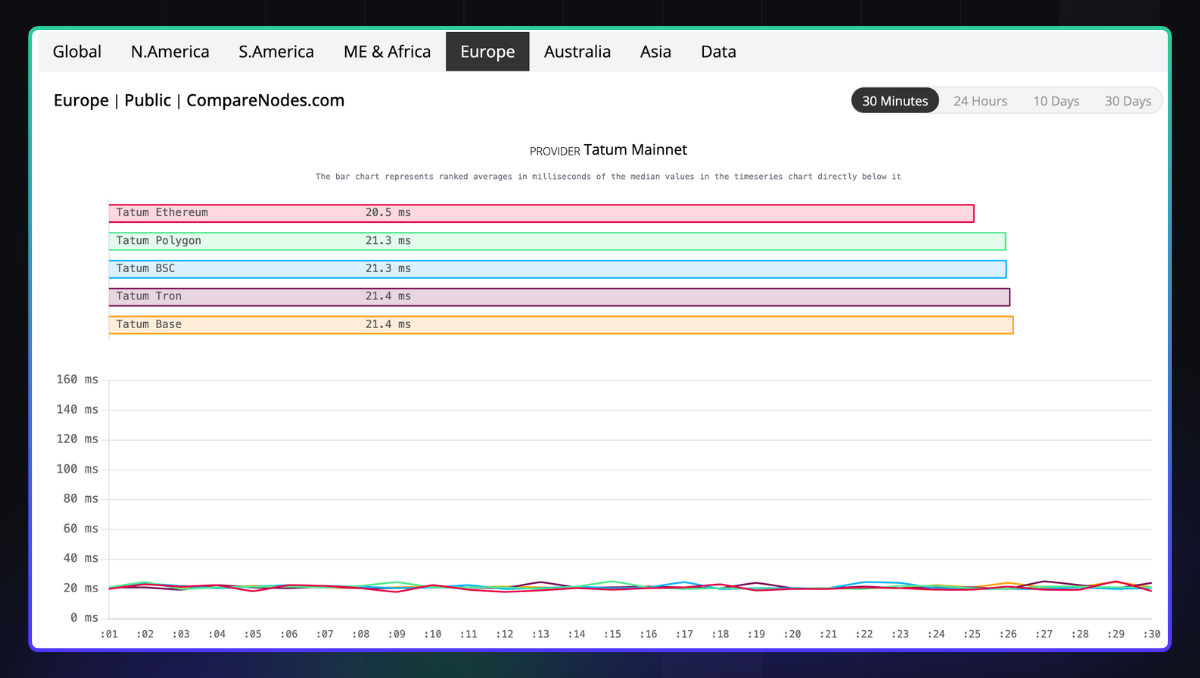
Measured during 30 minutes ending on Mon, 30 Mar 2026 08:04:49 UTC
Accessing Ethereum via JSON‑RPC
Through these endpoints, developers can use familiar RPC methods such as eth_getBalance, eth_call, and eth_blockNumber.
This makes it easier to integrate Ethereum into existing Web3 infrastructure without requiring significant changes to application logic.
You can explore the available RPC endpoints Ethereum RPC API documentation
| Network / Endpoint | URL |
|---|---|
| JSON-RPC | https://ethereum-mainnet.gateway.tatum.io |
| Beacon API | https://ethereum-mainnet.gateway.tatum.io/eth/v1 |
| JSON-RPC | https://ethereum-sepolia.gateway.tatum.io |
| Beacon API | https://ethereum-sepolia.gateway.tatum.io/eth/v1 |
| JSON-RPC | https://ethereum-hoodi.gateway.tatum.io |
| Beacon API | https://ethereum-hoodi.gateway.tatum.io/eth/v1 |
Test a Simple Call on Ethereum
Accessing On Chain Intelligence via Data APIs
The Ethereum JSON RPC is powerful but notoriously verbose. Fetching something as simple as a wallet balance across multiple tokens or a complete transaction history often requires several separate calls and a significant amount of data parsing. To build a modern user experience, you need a more streamlined way to access this data.
The Tatum Data API is designed to provide a comprehensive suite of tools that collapse these multi step processes into single, high level commands. Instead of writing complex logic to filter logs and decode smart contract states, you can use specialized endpoints to retrieve detailed information across the entire network. The scope of available data is broad, covering everything from core wallet functions to niche market insights. The current suite of APIs includes:
- Wallet and Transactions: Retrieve balances, history, and UTXO details.
- Tokens and NFTs: Manage metadata, ownership, and collection details.
- DeFi and Staking: Track validator activity, rewards, and contract events.
- Market Data: Access price exchange rates and marketplace insights.
- Security and Utilities: Use the Malicious Address API for safety, or resolve Web3 names like ENS instantly.
- Network Logistics: Get fee estimations, block data, and cross chain endpoints via the Blockchains and Mining APIs.
Deep Dive into Ethereum Staking
Since Ethereum moved to Proof of Stake, tracking validator activity and rewards has become a core requirement for many financial applications. Developers can now retrieve historical staking rewards, monitor current staked assets for specific addresses, and track validator interactions directly through the Staking API.
Recent updates have specifically expanded these capabilities to include specialized endpoints for Ethereum. You can now fetch all current staked assets for an address, view assets grouped by validator with delegated amounts, and retrieve historical rewards. This removes the need to build custom indexing solutions or complex scrapers just to show a user how much yield their staked ETH has generated.
Building Event Driven Applications with Notifications
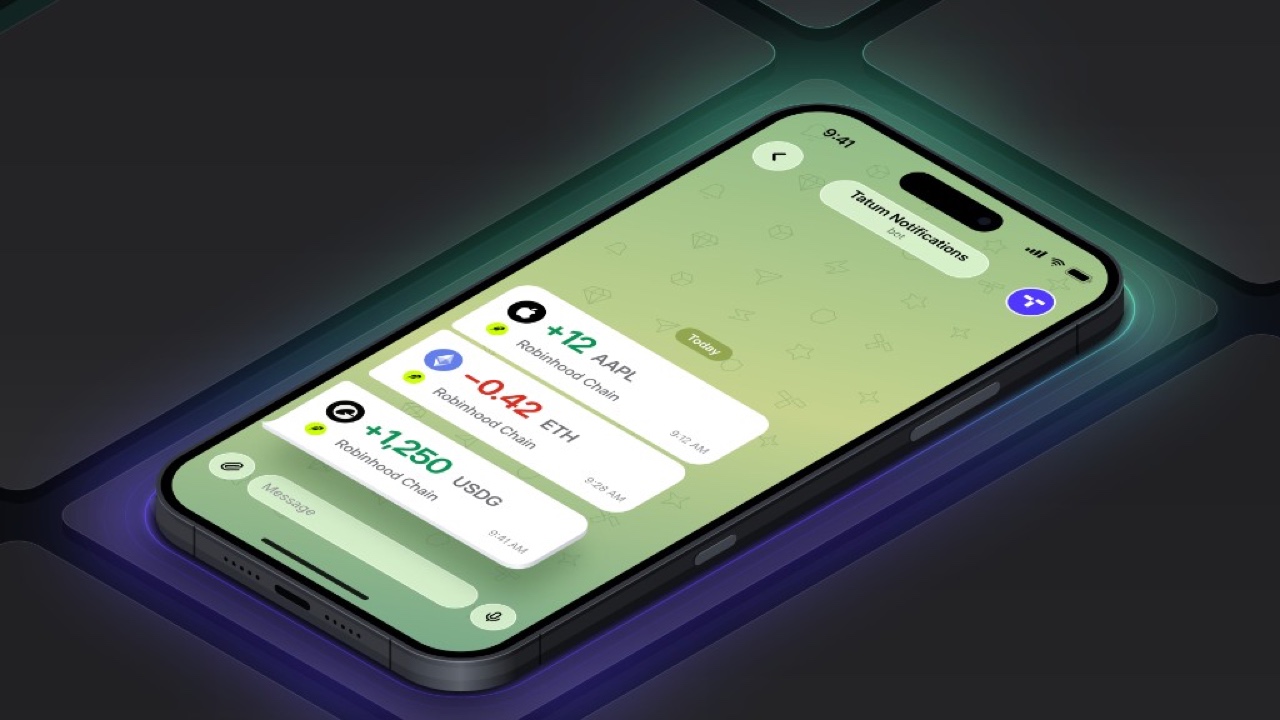
A dApp that feels static is a dApp that loses users. People expect real time feedback in modern web applications. If a user sends a payment or a smart contract event is triggered, they want to see that update in the UI immediately.
Manually polling the blockchain for updates is both inefficient and expensive. It wastes RPC credits and puts unnecessary load on your backend infrastructure. A more elegant solution is to use a push based model through webhooks. By subscribing to specific addresses or events, you can instruct the network to notify your server the moment a transaction occurs. Whether you are building a notification system for a wallet or an automated trading bot that triggers on specific on chain movements, using webhooks ensures your application remains responsive without the overhead of constant polling.
.png)
Enhancing Safety with Transaction Simulation
One of the biggest friction points for Ethereum users is the unpredictability of gas fees and the fear of failed transactions. Sending a transaction blindly can lead to lost funds or a poor user experience if the gas limit is set incorrectly.
The Transaction Simulator is a crucial tool for developers looking to build professional grade interfaces. By simulating a native or ERC20 transfer before it is actually broadcast to the network, you can identify potential logic errors or vulnerabilities. More importantly, it allows for highly accurate gas estimation. Instead of relying on generic network averages, you can see exactly how much gas a specific transaction will consume in the current state of the blockchain. This level of precision helps users avoid overpaying while ensuring their transactions are confirmed as quickly as possible.
Closing Thoughts
Building on Ethereum is a major milestone for any developer. While the network is complex and high stakes, the right infrastructure can turn these challenges into advantages. By moving away from manual node management and utilizing high level APIs for data, staking, and notifications, you can focus on building the features that actually set your project apart.