

%20(55).jpg)
Something clicked in the Ethereum Layer 2 landscape over the last few months. While many chains were fighting for speculative attention, Base quietly built a massive gravitational pull for actual capital and developer activity. It is no longer just "the Coinbase chain." It has become a primary liquidity hub where the numbers speak for themselves.
The ecosystem currently commands over 4.5 billion dollars in Total Value Locked. When you look at the activity, it is not just stagnant TVL either. We are seeing nearly 3.2 million dollars in daily app fees and over 180,000 dollars in daily chain revenue. This is a working economy. For developers, this represents a unique environment where users are active, gas is negligible, and the infrastructure is finally catching up to the demand.
Building on Base requires a specific approach to infrastructure. Whether you are scaling a lending protocol like Morpho Blue or a high frequency DEX like Aerodrome, you cannot rely on basic, unstable connections. You need a setup that handles the nuances of the OP Stack while providing the data depth required for modern Web3 applications.
| Name | Category | TVL |
|---|---|---|
|
1
Morpho Blue
|
Lending | $2.853b |
|
2
Steakhouse Financial
|
Risk Curators | $1.119b |
|
3
Uniswap
|
Dexs | $485.87m |
|
4
Aave V3
|
Lending | $415.3m |
|
5
Gauntlet
|
Risk Curators | $388.47m |
|
6
Aerodrome
|
DEX | $366.41m |
This guide explores the technical foundations of building on Base, from choosing the right RPC strategy to leveraging indexed data for a better user experience.
The Economic Reality of Building on Base
Developers are flocking to Base because it solves the most fundamental problem in blockchain: the cost of interaction. Because it is built on the OP Stack and leverages EIP-4844 blobs for data availability, transaction costs have plummeted. We are seeing fees that are often a fraction of a cent.
This shifts the developer's focus. On Ethereum Mainnet, you spend hours optimizing every byte of Calldata to save users money. On Base, you can afford to build richer, more complex onchain logic. This is why we see such diversity in the top protocols. Morpho Blue leads the way with nearly 2.9 billion dollars in TVL, followed by Steakhouse Financial and Uniswap. Even native projects like Aerodrome have found massive success, proving that Base can foster its own ecosystem rather than just hosting clones of existing protocols.
The full EVM compatibility means your existing Solidity skills and tools like Hardhat or Foundry work perfectly. However, the sheer volume of transactions means that your backend infrastructure has to be more resilient than ever before.
Reliability at Scale: Base RPC and Smart Routing
The most common point of failure for any dApp is the RPC connection. When traffic spikes or a node falls behind the chain tip, your users see spinning loaders and failed transactions. This is where a standard connection usually fails.
Tatum provides high performance RPC access for both Base Mainnet and the Sepolia testnet. For developers who need to move beyond simple requests, we offer an RPC Router. Instead of pinning your application to a single node, the router acts as a smart gateway. It monitors the health and latency of multiple nodes in real time, automatically shifting your traffic to the best performing endpoint.
If you are just getting started, you can verify your connection to the Base Mainnet with a simple cURL command using your API key.
This gives you a direct line to the network. For those who prefer a more structured testing environment, our pre-configured Postman collection allows you to test every Base RPC method from eth_getBalance to complex debug_tracecalls without writing a single line of boilerplate code.
Making your first call on Base
This gives you a direct line to the network. For those who prefer a more structured testing environment, our pre-configured Postman collection allows you to test every Base RPC method from eth_getBalance to complex debug_tracecalls without writing a single line of boilerplate code.
Moving Beyond Polling: Blockchain Notifications
A major architectural mistake many teams make is relying on constant polling to detect onchain events. Sending a request every few seconds to see if a transaction confirmed is inefficient and expensive. It puts unnecessary load on your infrastructure and creates a laggy experience for your users.
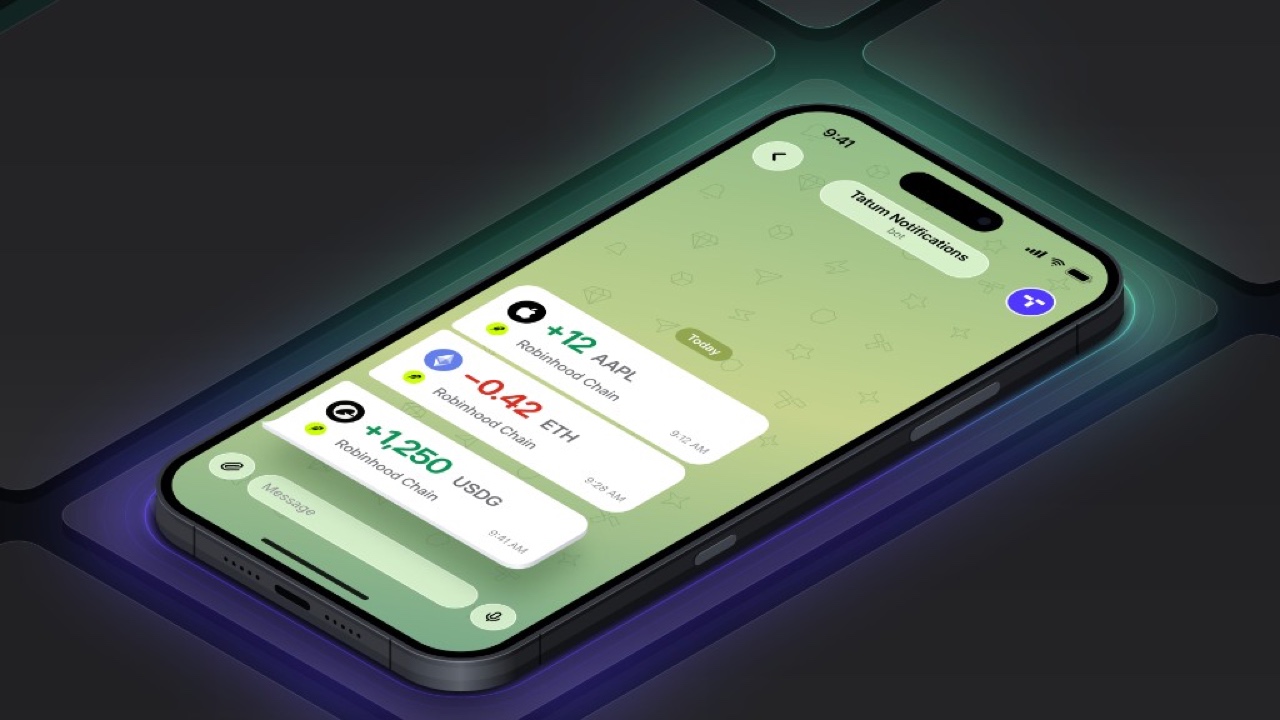
Real time notifications change this dynamic. By using webhooks, you can tell the infrastructure to alert your server the moment a specific event occurs on Base. Whether it is an incoming ETH transfer, an ERC-20 token movement, or a specific smart contract event, the data is pushed to you instantly.
This is essential for building responsive applications. If a user deposits into a vault on a protocol like Aave V3 or Morpho, your UI should reflect that change immediately. Using Tatum's notification system allows you to subscribe to addresses or contract logs so your app stays in sync with the chain without the overhead of manual polling.
Simplifying the Data Layer with Indexed APIs
The raw data coming off an RPC node is often difficult to work with. If you want to show a user their entire transaction history or their full portfolio of tokens on Base, you would traditionally have to scan thousands of blocks or query dozens of individual smart contracts.
Our Data APIs do the heavy lifting for you. We index the Base blockchain in real time, providing structured access to information that is usually hard to get.
The Token API allows you to retrieve balances and metadata for any ERC-20 token on Base instantly. The NFT API handles the complexities of ERC-721 and ERC-1155 tokens, including metadata resolution and ownership history. For more comprehensive needs, the Wallet API provides a bird’s eye view of any address, showing all held assets and historical activity in a single response.
By offloading the indexing to Tatum, you can focus on building your core product features instead of managing a massive database of blockchain events. This is how small teams are able to build applications that feel as fast and responsive as traditional fintech apps.
Build on Base Without Managing the Backend Complexity
Interact with Base using a single API for wallets, transactions, and onchain data. Handle gas, scaling, and key management without building custom infrastructure from scratch.
Start building on BaseWhy Base is the Future of the OP Stack
Base has managed to do something very few L2s have achieved: they built a community that feels organic. With the backing of Coinbase and a clear technical roadmap, it has become the default choice for many new projects. The daily app revenue of nearly one million dollars suggests that users are not just moving money around, they are actually using the applications built on top of the network.
As a developer, your choice of infrastructure will determine how well you can serve these users. Using a combination of resilient RPC routing, push based notifications, and indexed data APIs gives you a massive advantage. It allows you to build faster, reduce your operational overhead, and provide a user experience that meets the high expectations of the current Web3 market.
The tools are ready. The liquidity is there. The fees are low. Now is the time to build on Base.