


%20(5).jpg)
The Engine Behind Wallet Trackers and Real-Time Crypto Monitoring
If you’ve ever used a wallet tracker, a crypto portfolio app, or a bitcoin transaction tracker that updates the moment a transaction hits the blockchain, there’s a good chance it relied on one thing: blockchain notifications.
They don’t get much attention, and most users never think about them, but for developers they are the quiet infrastructure that makes real-time crypto experiences feel instant and effortless.
Blockchains themselves are not designed to “inform” anyone when something happens.
They just publish data, blocks, transactions, logs, and leave it up to applications to make sense of it. Without notifications, developers would be forced to constantly poll nodes, re-read blocks, or build complex indexers just to know whether a wallet received funds or whether a transaction was finally confirmed.
Notifications solve that problem elegantly.
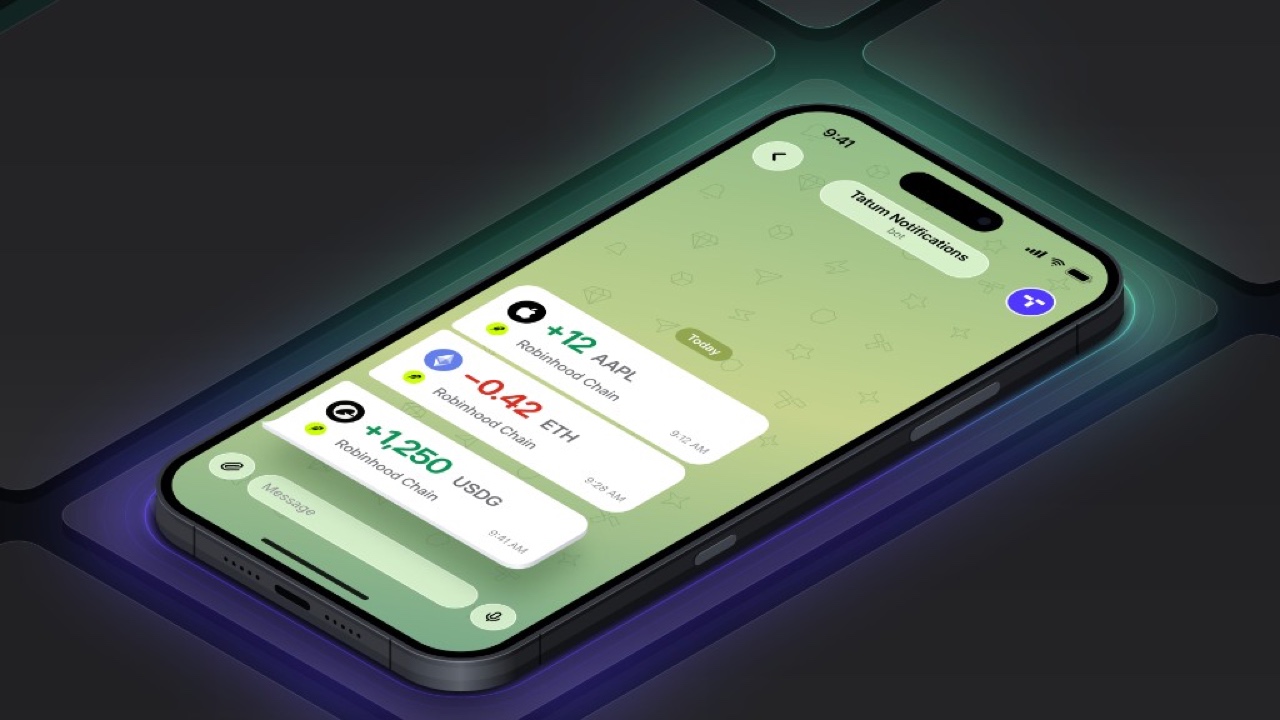
They watch the chain for you and push information the moment it becomes relevant.
Why Notifications Matter for Wallet Trackers and Transaction Monitoring
A modern wallet tracker depends on speed and reliability. If a user is waiting for a deposit, or trying to understand why a transaction is stuck, the tracker needs to reflect changes in real time. Polling every few seconds isn’t good enough, especially when you multiply that cost across tens of thousands of addresses.
Notifications offer something far more efficient: instead of asking the blockchain “Has anything changed?”, they simply wait, observe, and alert you the moment something does.
This approach dramatically reduces infrastructure costs. It also improves the accuracy of tools designed to track bitcoin transactions or monitor assets across multiple chains. A bitcoin transaction tracker, for instance, can’t afford to miss the moment a transaction moves from the mempool to the first confirmation. Notifications turn what used to be a heavy engineering problem into a straightforward event subscription.
There’s a security angle too. Real-time alerts provide early signals of unusual withdrawals, failed contract executions, or unexpected balance changes. For applications dealing with custody, payments, or automation, this kind of responsiveness isn’t a “nice to have.” It’s essential.
How Blockchain Notifications Work Behind the Scenes & How To Set Them Up.
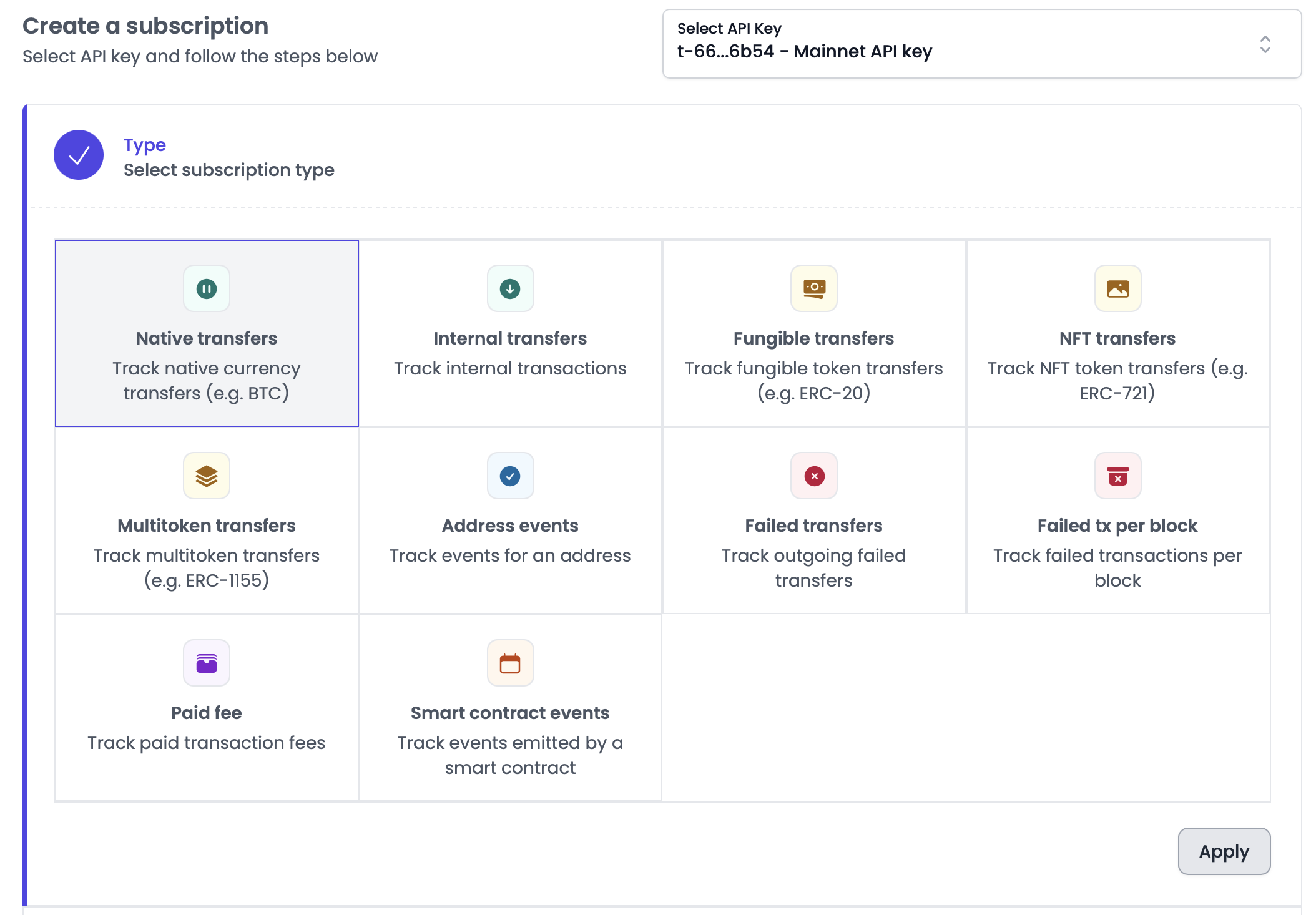
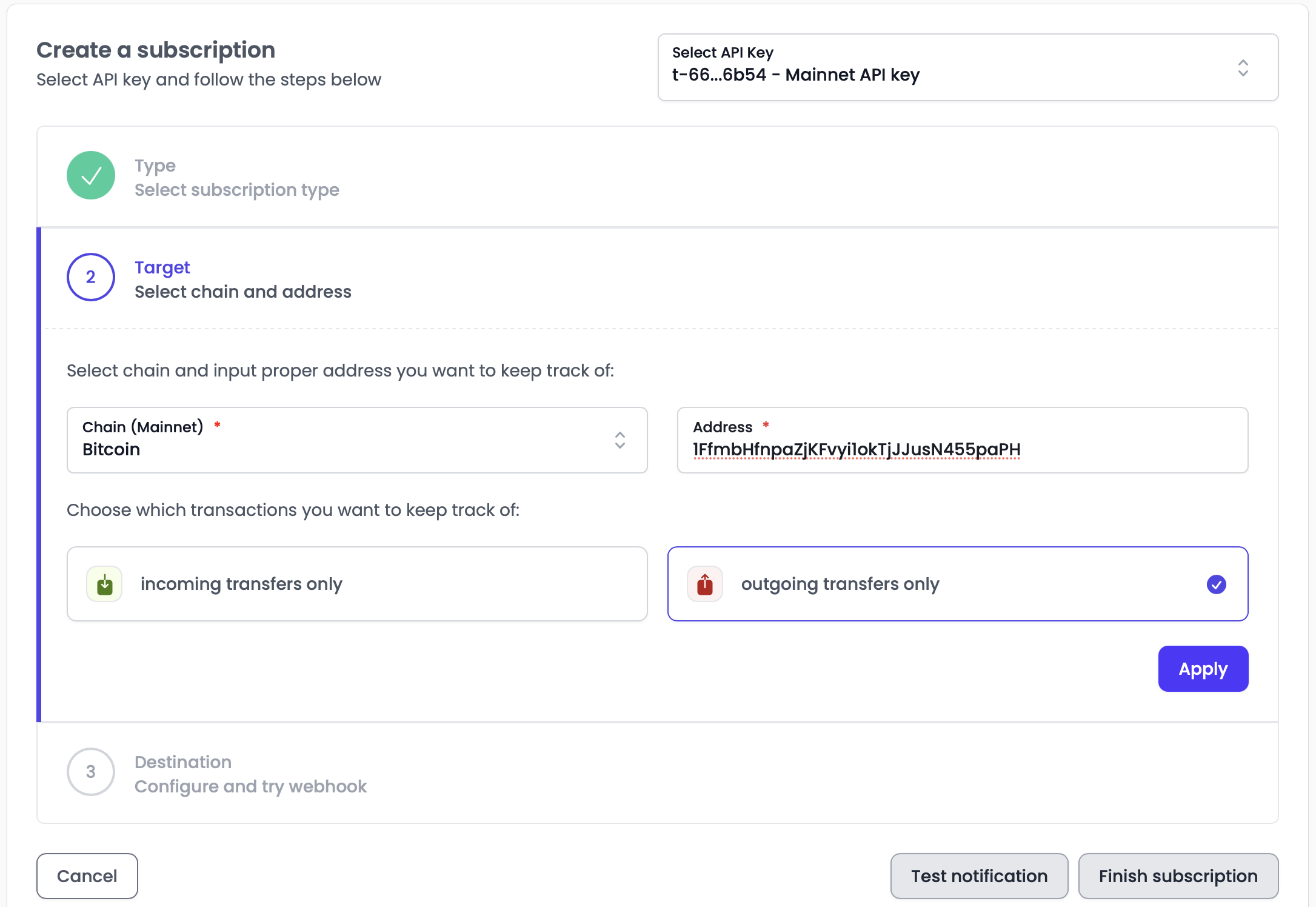
The general workflow is surprisingly simple. A developer first creates a subscription, specifying the blockchain, the address or contract to watch, and the URL where notifications should be delivered. Once that subscription exists, the notification service begins monitoring the chain for relevant events, incoming transfers, outgoing payments, token movements, NFT activity, even failed transactions depending on the subscription type.
When something happens, the service waits for the appropriate number of confirmations, usually one confirmation on EVM chains and two confirmations on UTXO networks like Bitcoin, and then fires a webhook to the listener URL. The webhook payload includes the event details so the receiving application can update a user interface, trigger internal logic, or store the data for analytics.
A typical subscription request from your Tatum dashboard looks like this:
- Select the type of events you wish to monitor.
- Select the chain and the address you wish to monitor.
- Paste the webhook URL where you wish to receive the notifications.
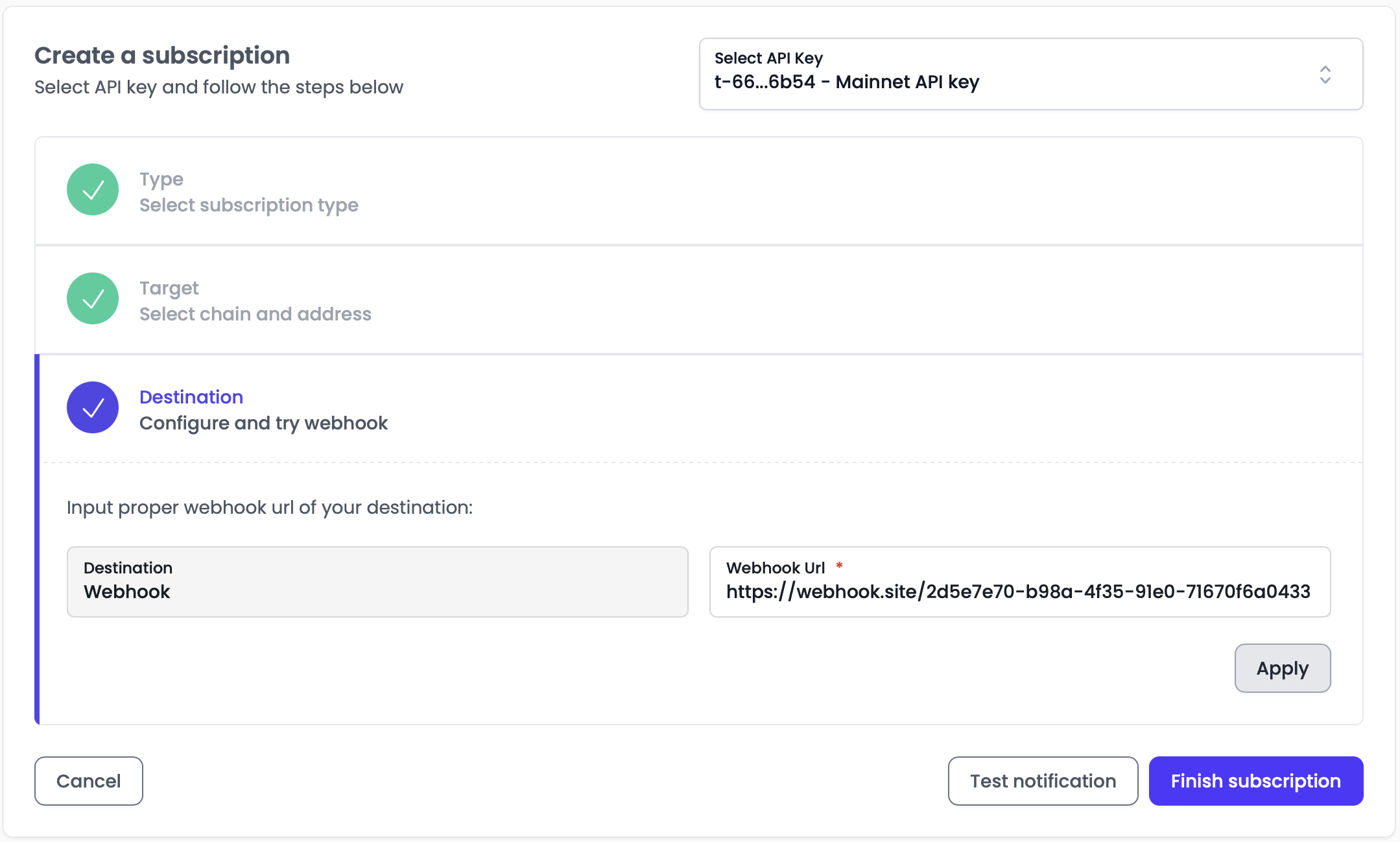
Once this is created, the system keeps watching that address. The moment something occurs, the webhook is sent.
For a crypto wallet tracker, this single integration represents the difference between a static experience and one that feels fast and alive.
A Closer Look at Event Types and Real-Time Behavior
While it’s easy to think of notifications as “sending alerts when money moves,” the scope is much broader. Transfers can include on-chain value movement, token transfers, NFT transactions, and even internal balance adjustments that happen during contract execution. Applications that track bitcoin transactions benefit from UTXO-specific signals as well, mempool appearances, confirmations, or dropped transactions when the fee is too low.
Smart contract developers often rely on log event notifications. Instead of building or maintaining a full indexing pipeline, they can simply subscribe to a contract and receive a webhook every time a specific event fires. This enables automation around mints, burns, swaps, stakes, or any custom event a contract emits.
The flexibility to monitor both address activity and contract logs means developers can build a crypto wallet tracker with the same infrastructure used to monitor liquidity events on DeFi protocols.
Templates: Making Notifications Easier to Work With
Not all applications want the same payload. Some tools prefer normalized field names, some need only a subset of data, and others want events formatted the same way across multiple chains. Notification templates allow developers to define their own structure and apply it automatically.
For example, a wallet tracker monitoring bitcoin and Ethereum activity can unify its incoming events to use “from”, “to”, and “amount”, even if different blockchains have different conventions. This makes it far easier to process notifications inside the application and reduces the amount of custom logic required.
Templates can be updated or removed at any time, and developers can attach a template ID directly when creating a subscription.
| Step | Details |
|---|---|
| Create Template | Send a POST request to create a custom notification template |
| Endpoint | POST https://api.tatum.io/v4/subscription/template |
| Required Headers |
accept: application/json content-type: application/json x-api-key: YOUR_API_KEY |
| Request Body Fields |
format: "json" keys: Field mapping for the notification template – amount → value – sentFrom → from – sentTo → to |
| Example Request |
curl --request POST \
  --url https://api.tatum.io/v4/subscription/template \
  --header 'accept: application/json' \
  --header 'content-type: application/json' \
  --header 'x-api-key: YOUR_API_KEY' \
  --data '{
    "format": "json",
    "keys": {
      "amount": "value",
      "sentFrom": "from",
      "sentTo": "to"
    }
  }'
|
A Note on Performance: The Tron Upgrade
Different blockchains behave differently, and some are more challenging to handle than others.
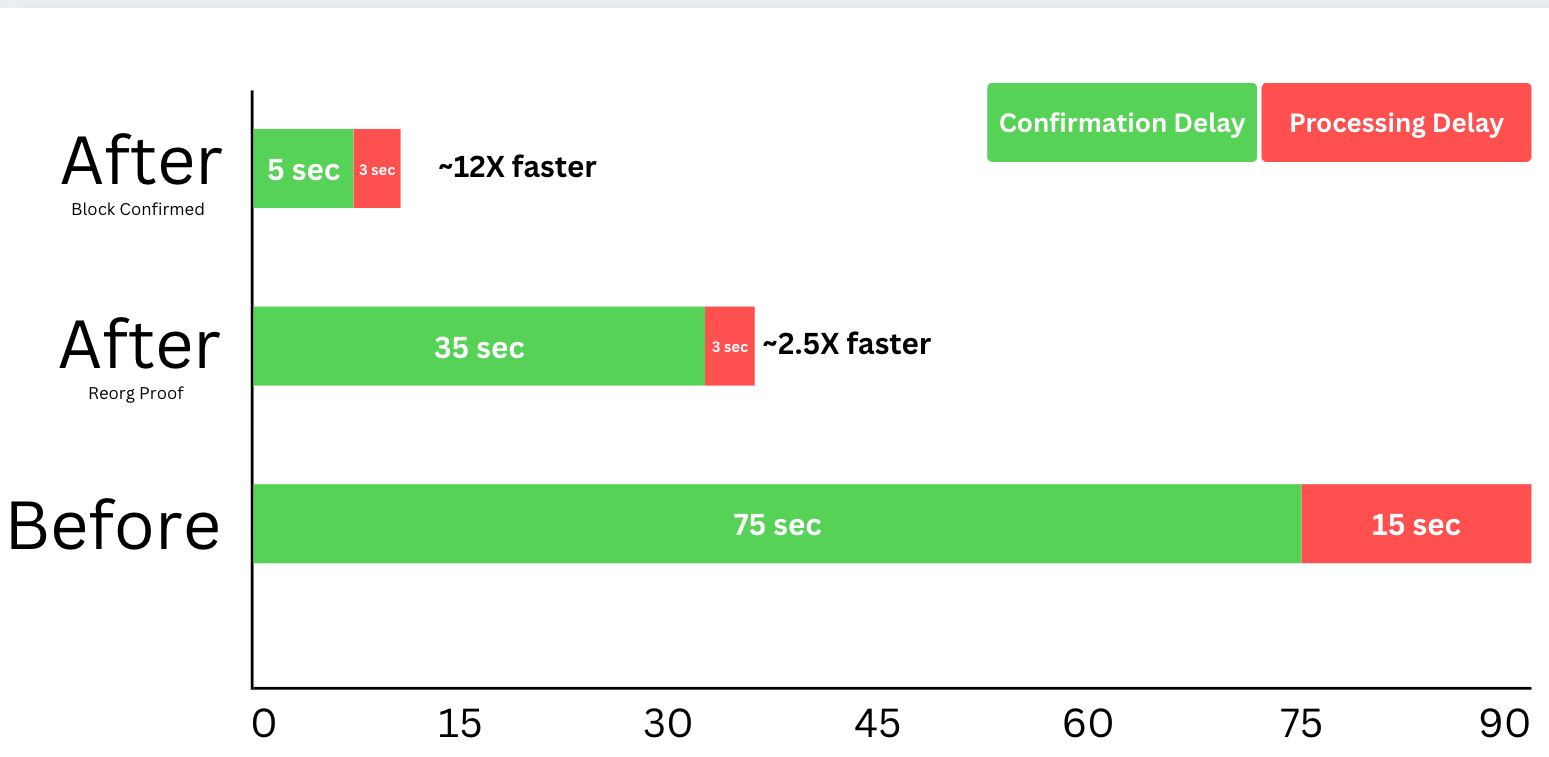
Tron, for instance, produces blocks quickly and can reorganize its chain under certain conditions. Detecting stable events without triggering false positives requires careful engineering.
A recent upgrade significantly improved Tron notification performance. Re-org handling is now roughly 2.5× faster, and the confirmation process can be up to 12× faster depending on the settings. Developers also get more control through finality options, “confirmed” for faster delivery or “final” for maximum certainty. This kind of optimization matters for businesses that process large volumes of stablecoin payments or operate high-traffic Tron-based applications.
Tracking Bitcoin Transactions Without Running Heavy Infrastructure
Bitcoin is often the chain where developers first feel the limitations of manual block polling.
Its UTXO model produces a different transaction pattern, and identifying which outputs belong to which address can become complex.
Notifications simplify this dramatically. Instead of parsing raw blocks, a bitcoin transaction tracker can subscribe to an address and immediately receive information when a transaction enters the mempool, when it receives its first confirmation, and when additional confirmations occur. If the transaction is dropped or replaced due to fee issues, the webhook captures that too.
For anyone building tools to track bitcoin transactions, exchanges, wallets, payment processors, audit systems, this model removes the need to maintain their own dedicated Bitcoin indexer.
Where Blockchain Notifications Make the Biggest Impact
Developers use notifications in many ways, but real-time monitoring always plays a central role. Portfolio apps rely on them to reflect user balances accurately. Compliance systems use them to watch large transfers or movements involving flagged addresses. Automated trading tools react to contract events or pool updates. Games detect onchain actions that correspond to in-game behavior. And any crypto wallet tracker uses them to make the user experience feel responsive instead of delayed.
This entire ecosystem depends on reliable, fast, consistently delivered blockchain events, and notifications provide exactly that, without forcing teams to invest in heavy backend systems.
The Future of Onchain Monitoring
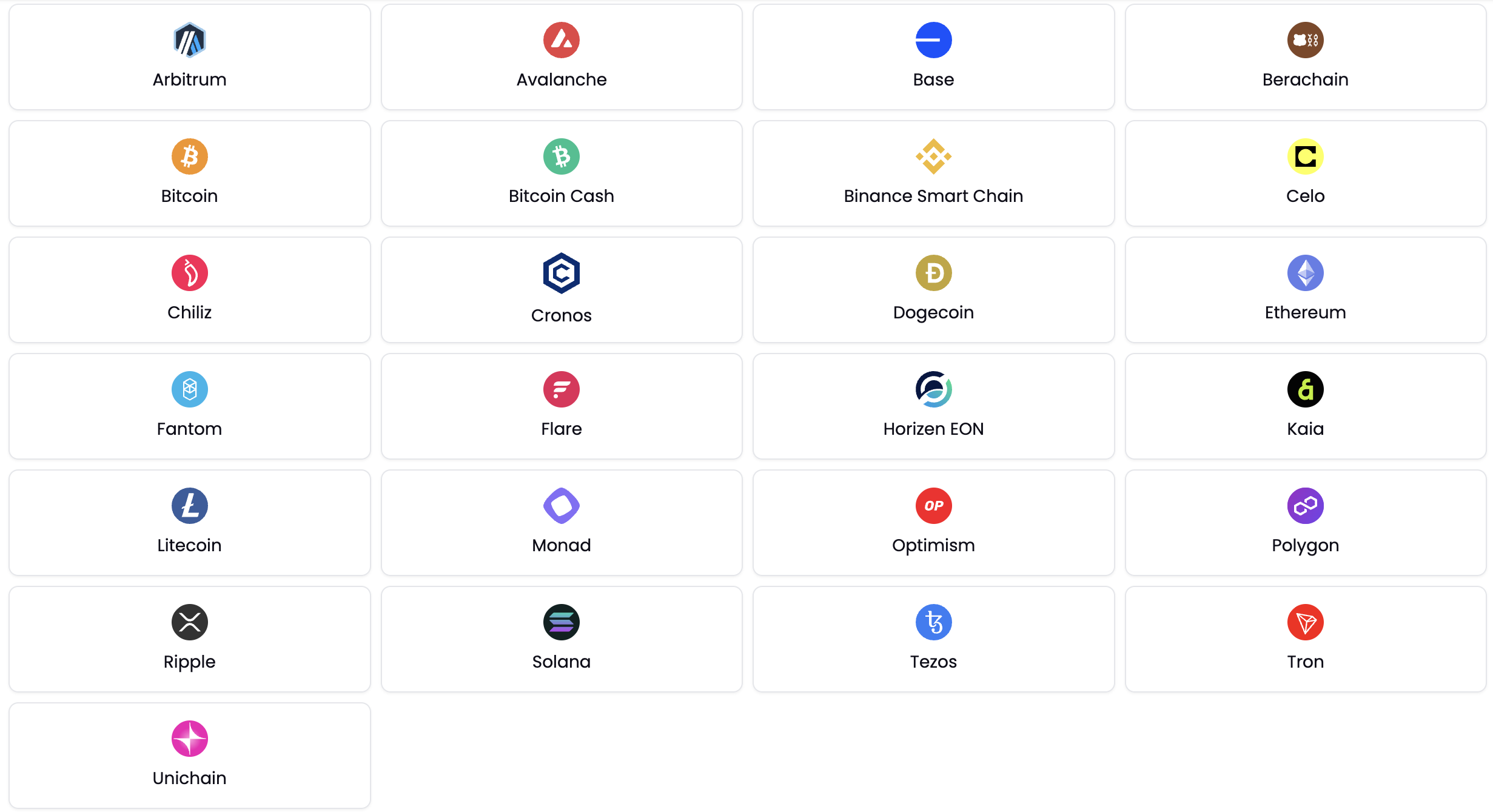
As blockchains continue to scale, the value of event-driven infrastructure will only grow. Instant updates, unified payloads, customizable templates, and support across dozens of chains lay the foundation for a new generation of real-time crypto applications. Whether you’re building a simple wallet tracker or a full-scale analytics platform that needs to track bitcoin transactions across thousands of addresses, notifications remain one of the most efficient tools available.
They allow developers to stay reactive instead of repetitive, responding to events exactly when they happen rather than burning compute cycles searching for them. In a landscape defined by speed, automation, and increasingly cross-chain activity, that approach isn’t just cleaner, it’s the only approach that scales.

%20(86).jpg)