


%20(11).jpg)
Scalability is no longer a theoretical problem in Web3. It shows up the moment users arrive. Fees spike, transactions slow down, and suddenly a product that worked perfectly in testnet starts bleeding users in production. For many teams, this is the point where rollups stop being an option and become a necessity.
But once you accept that you need a rollup, another problem appears. There is no single “best” rollup service. Instead, there is a growing landscape of Optimistic rollups, ZK rollups, app-specific rollups, and Rollup-as-a-Service platforms, each with different trade-offs in speed, security, cost, and operational complexity.
This guide is written for builders who want clarity. We will break down how rollups actually work, compare the main rollup approaches, and explain how to think about infrastructure choices around rollups, especially once your application is live and scaling.
| Rollup | Rollup Type | TPS Last 24H | 30D Transaction Count |
|---|---|---|---|
| Lighter | ZK Rollup | 2.04K | 5.06B |
| Base | Optimistic Rollup | 111.86 | 332.81M |
| Polygon PoS | Other | 72.53 | 186.18M |
| Arbitrum One | Optimistic Rollup | 26.74 | 69.17M |
| OP Mainnet | Optimistic Rollup | 26.93 | 58.69M |
| Ethereum | Layer 1 | 25.05 | 55.07M |
| World Chain | Other | 18.11 | 51.95M |
| MegaETH | Other | 22.43 | 51.47M |
| Celo | Optimium | 16.64 | 41.86M |
| Soneium | Other | 20.36 | 40.16M |
| Fuel Ignition | Other | 18.35 | 36.20M |
| PlayBlock | Other | 10.21 | 31.14M |
| Eclipse | Other | 11.25 | 29.46M |
| Unichain | Optimistic Rollup | 9.33 | 20.50M |
| Paradex | Other | 9.00 | 17.82M |
| Ink | Optimistic Rollup | 4.43 | 12.29M |
| Starknet | ZK Rollup | 2.87 | 6.87M |
| Abstract | ZK Rollup | 2.07 | 5.96M |
| Reya | Other | 2.21 | 5.15M |
| Linea | ZK Rollup | 2.98 | 3.89M |
| X Layer | Other | 4.37 | 4.00M |
As of Jan 12th 2026.
Why Rollups Became the Default Scaling Path
Layer 1 blockchains were never designed to handle millions of daily users. Ethereum prioritizes decentralization and security, which means limited block space and competition for inclusion. As adoption grows, the result is predictable: higher gas fees and worse user experience.
Rollups solve this by moving execution off-chain while keeping security anchored to the base layer. Instead of forcing every node to process every transaction, rollups batch thousands of transactions together and submit only compressed data or proofs back to Layer 1.
This approach reduces congestion, lowers fees dramatically, and allows applications to scale without compromising on trust assumptions. That is why rollups now sit at the center of most serious Web3 roadmaps.
What a Rollup Actually Does Under the Hood
At a high level, a rollup processes transactions outside the main chain, updates its own state, and periodically commits those updates to Layer 1. The base chain acts as the final arbiter, ensuring that rollup state transitions follow the rules.
What changes between rollup types is how validity is enforced.
Some rollups assume transactions are valid unless proven otherwise. Others prove correctness upfront using cryptography. Some are general-purpose, while others are designed for a single application.
Understanding these differences is key to choosing the best blockchain rollup service for your project.
Optimistic Rollups, The Most Familiar Path
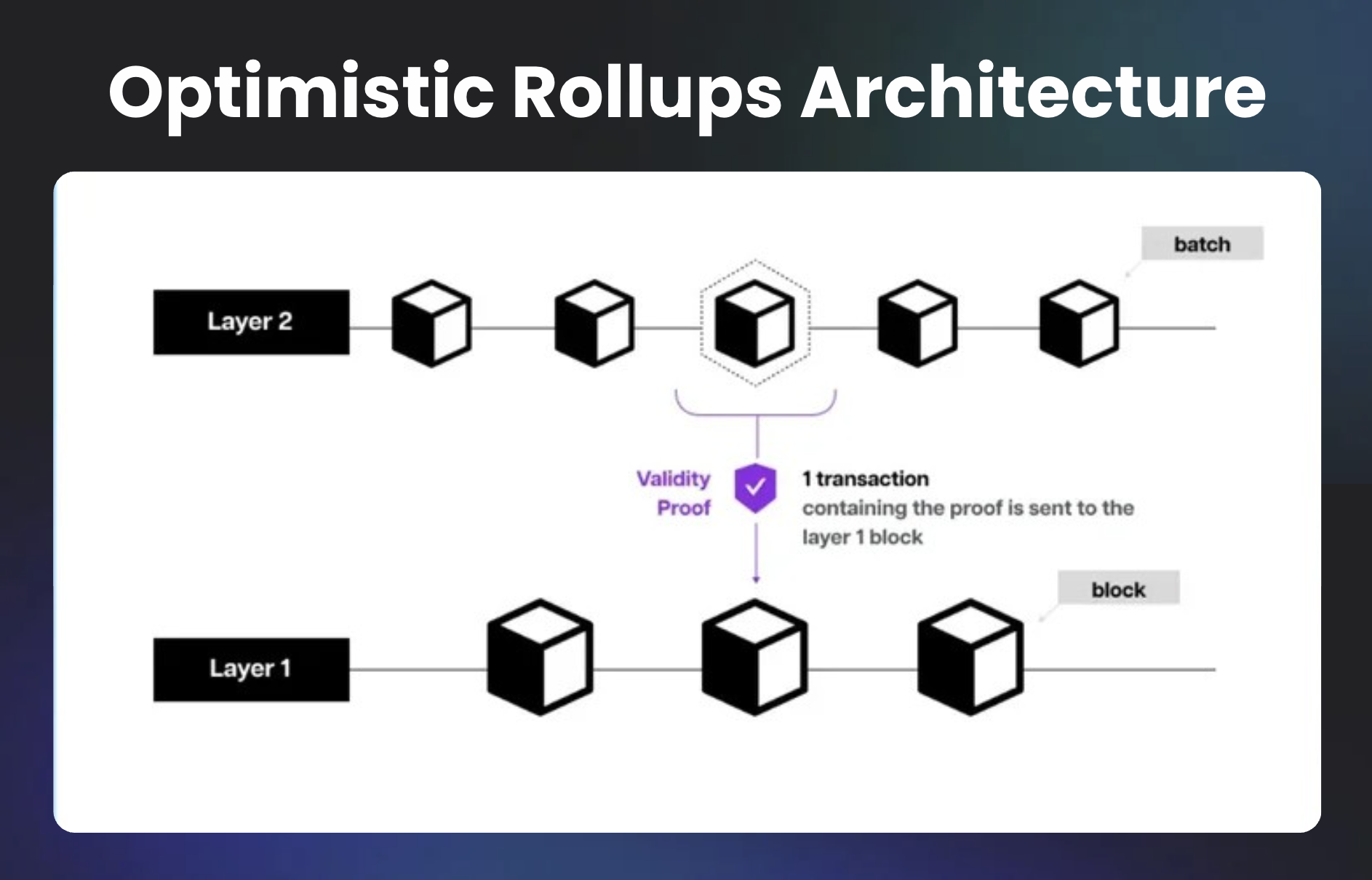
Optimistic rollups take a pragmatic approach to scaling. Transactions are executed off-chain and assumed to be valid by default. The system only steps in if someone challenges a transaction during a predefined dispute window.
This model works well for most consumer-facing Web3 applications and is often the easiest entry point for teams coming from Ethereum.
Key characteristics
-EVM-equivalent execution, existing Ethereum tooling works with minimal changes
-Mature ecosystems with deep liquidity and active developer communities
-Lower development complexity compared to other rollup models
Trade-offs to consider
-Withdrawals back to Layer 1 can take several days
-Finality is delayed due to challenge periods
-Less suitable for applications requiring instant settlement
Optimistic rollups are a strong choice when speed to market, compatibility, and developer experience matter more than instant finality.
ZK Rollups, Security and Finality First
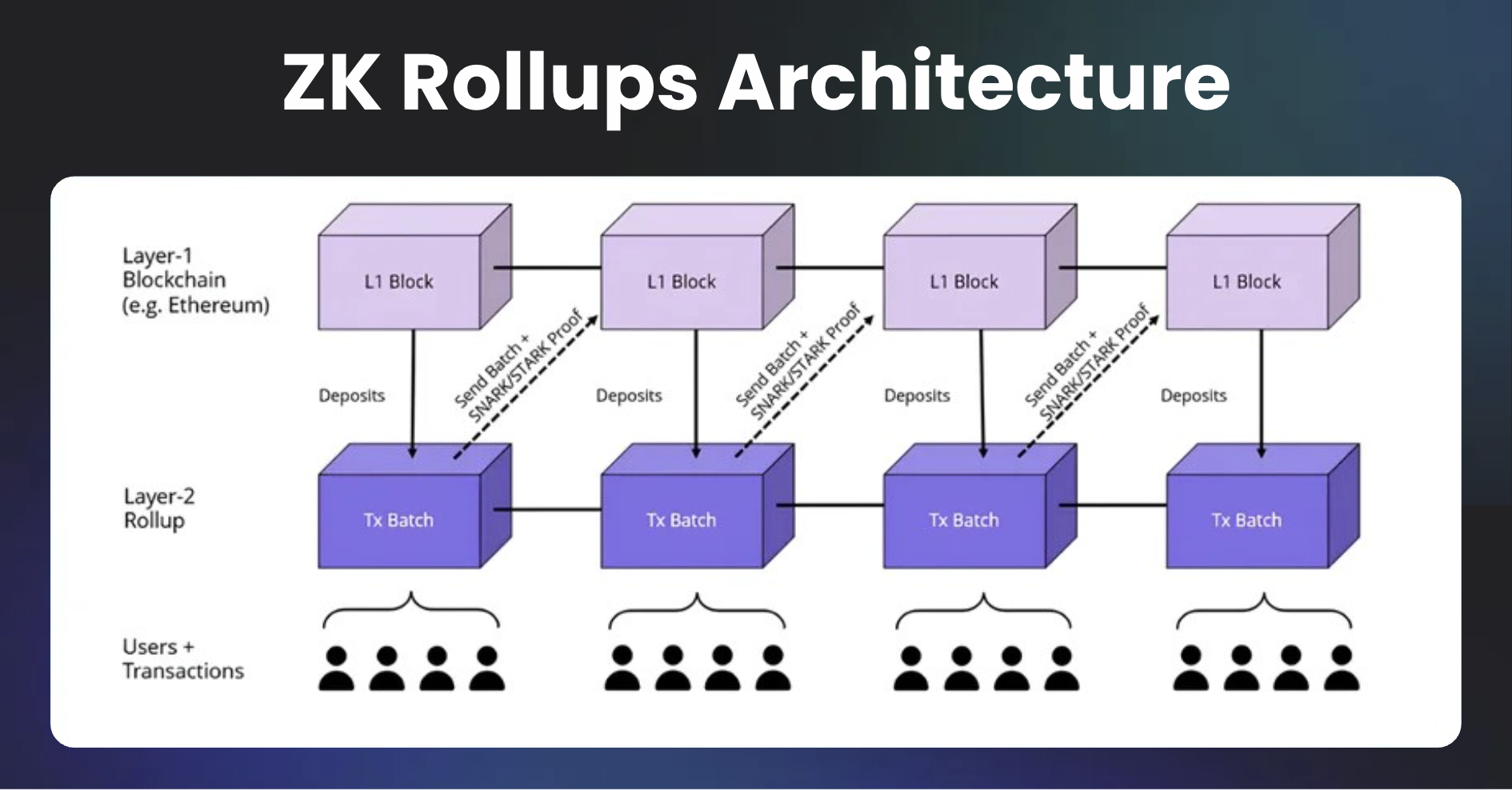
ZK rollups validate transactions using cryptographic proofs rather than dispute mechanisms. Each batch of transactions is mathematically proven to be correct before being finalized on Layer 1.
This makes ZK rollups particularly attractive for applications that cannot compromise on security or settlement speed.
Key characteristics
-Near-instant or fast finality once proofs are verified
-Strong security guarantees through validity proofs
-Efficient scaling for high transaction volumes
Trade-offs to consider
-More complex development and infrastructure requirements
-Proof generation can be computationally expensive
-Tooling and ecosystems are improving but still evolving
ZK rollups are often the preferred choice for payment systems, enterprise applications, and high-value financial use cases.
App-Specific Rollups, Maximum Control at a Higher Cost
App-specific rollups are designed for teams that want full control over execution, fees, and performance. Instead of sharing a general-purpose Layer 2, the rollup is built specifically for one application.
This model turns the rollup itself into part of the product.
Key characteristics
-Full customization of execution logic and throughput
-Freedom to choose data availability and settlement layers
-Ability to tailor user experience at the protocol level
Trade-offs to consider
-Higher engineering and operational complexity
-Ongoing maintenance becomes the team’s responsibility
-Less suitable for small or early-stage teams
App-specific rollups make sense when scale, customization, and long-term ownership outweigh convenience.
Rollup as a Service, Scaling Without Becoming an Infra Team
Rollup-as-a-Service platforms emerged to close the gap between ambition and execution. They allow teams to deploy rollups quickly, without spending months building infrastructure from scratch.
For many builders, this is the most practical answer to the question of the best rollup service. You get a production-ready rollup, managed upgrades, monitoring, and security practices, while staying focused on your product.
The key consideration here is long-term ownership. Service fees, customization limits, and provider dependency all need to be weighed carefully.
Choosing the Best Blockchain Rollup Service Is Not Just About the Rollup
One mistake teams often make is treating the rollup as the final decision. In reality, launching on a rollup is only the beginning. Once users arrive, you still need to operate reliably at scale.
This includes:
-Stable RPC access across Layer 1 and Layer 2
-Low-latency transaction routing
-Indexed blockchain data
-Real-time event tracking
-Secure key management
-Cost control as usage grows
This is where infrastructure platforms like Tatum become critical. Regardless of whether you choose an Optimistic rollup, a ZK rollup, or a custom chain, you still need consistent tooling to interact with the network, monitor activity, and scale safely.
Tatum acts as an abstraction layer on top of blockchains and rollups, letting teams focus on building products instead of managing nodes, indexers, and edge cases across multiple environments.
Common Pitfalls Builders Should Avoid
Many rollup decisions go wrong for the same reasons. Teams optimize for hype instead of requirements. They underestimate operational overhead. They ignore withdrawal times or assume infrastructure will “just work” later.
The best rollup service is the one that fits your product today and still supports where you want to be in two years.
Final Thoughts
There is no universal best blockchain rollup service. There are only trade-offs.
Optimistic rollups prioritize accessibility and ecosystem maturity.
ZK rollups prioritize security and fast finality.
App-specific rollups prioritize control.
Rollup-as-a-Service prioritizes speed to market.
The winning teams are not the ones who pick the trendiest rollup, but the ones who pair the right rollup model with reliable infrastructure and clear operational thinking.
%20(70).jpg)