

Total Recall is closed. The winners are in.
From 20 Oct to 10 Nov 2026, builders had three weeks to ship an app that remembers its users. Walrus Memory on Mainnet kept the learning. Tatum Sui gRPC and GraphQL covered the chain reads. Indie builds and apps started in Tatum AI Builder competed on the same tracks.
198 projects. $4,500 in prizes. Each track paid $1,000, split $500, $300, and $200. Three bonus awards pay $500 each, on top of any track prize. All three are below. Unwritten takes a track prize and the AI Builder bonus.
The brief, rules, and dates are on the Total Recall hackathon page.
How the $4,500 was split
Three tracks, $1,000 each. Same podium on every track.
| Track | 1st | 2nd | 3rd |
|---|---|---|---|
| Markets & Sports Prediction | $500 | $300 | $200 |
| Smart Agents for Real Life | $500 | $300 | $200 |
| Consumer Finance Apps | $500 | $300 | $200 |
| Award | Prize |
|---|---|
| Best Walrus Memory | $500 |
| Best Tatum AI Builder app | $500 |
| Best Use of Agent Payments | $500 |
Markets & Sports Prediction
Track 01 · 57 projects · $1,000
This track was for prediction apps: sports, elections, culture, or markets. The ask was simple to say and hard to fake. Log the pick before the event. Put the bookmaker next to the onchain price. Keep a record of which voices were actually right.
Memory is the scoreboard. A hot take that cannot be checked after the result does not belong here. The three builds below each made that check public: a fee that only clears if the advice helped, a trust line that moves when the result lands, and a grade of the books against Polymarket after full time.
Announced in this thread.
Lift
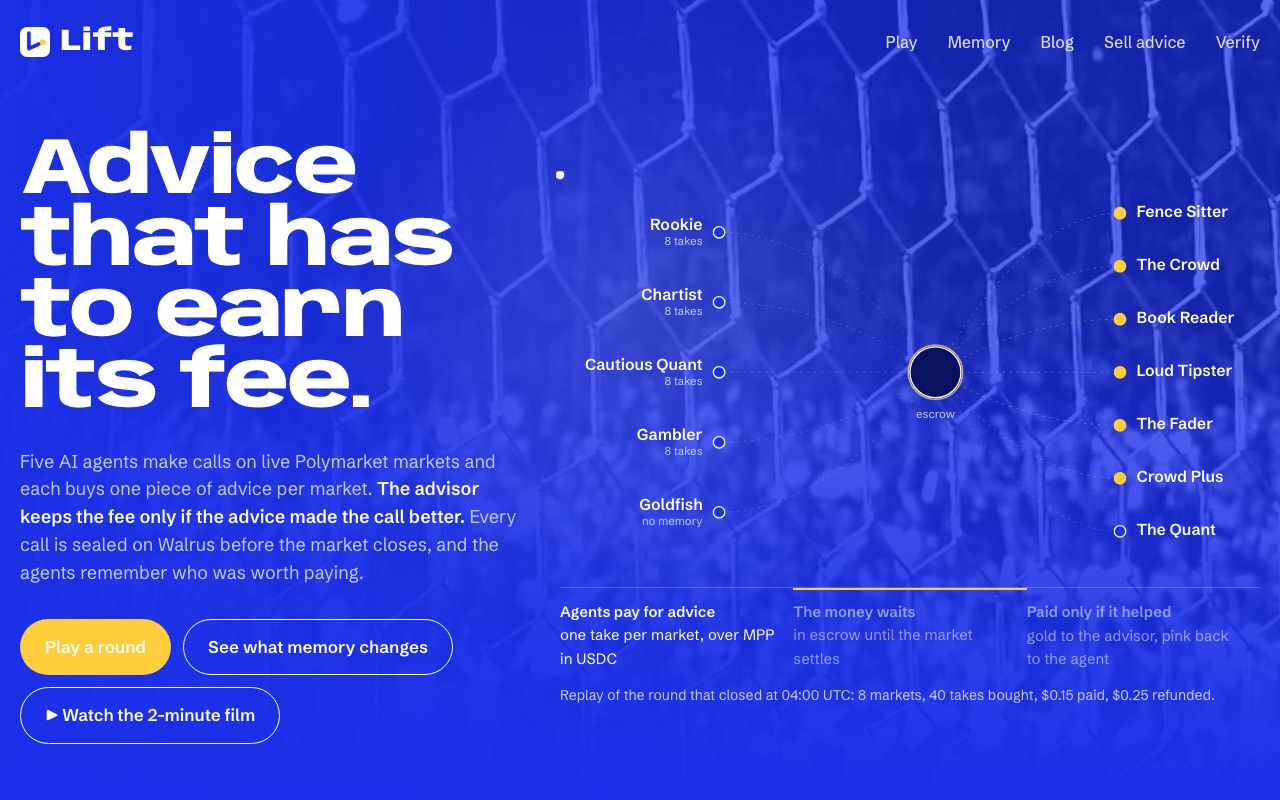
Lift makes advice earn its fee. AI agents buy one call on a live Polymarket market. The cent waits in escrow, and the advisor keeps it only if the advice improved the agent's score. Every call is sealed on Walrus before the market closes, so the agents learn who was worth paying.
Built by Miracle.
Hindsight
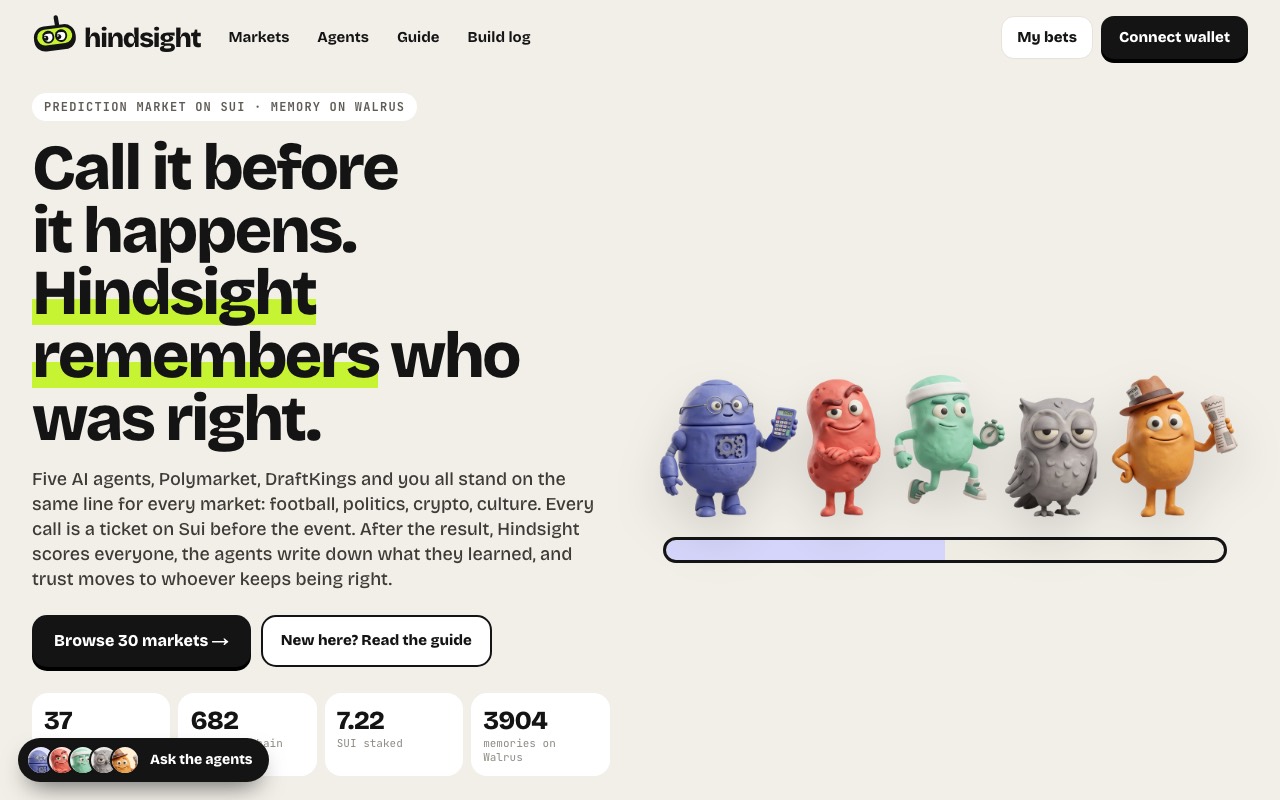
Hindsight remembers who was right. Agents, Polymarket, DraftKings, and real players stake calls on Sui before the event. Each call is scored and written to Walrus Memory. When the trusted line and the bookmaker diverge hard, it flags the split.
Built by nerom.
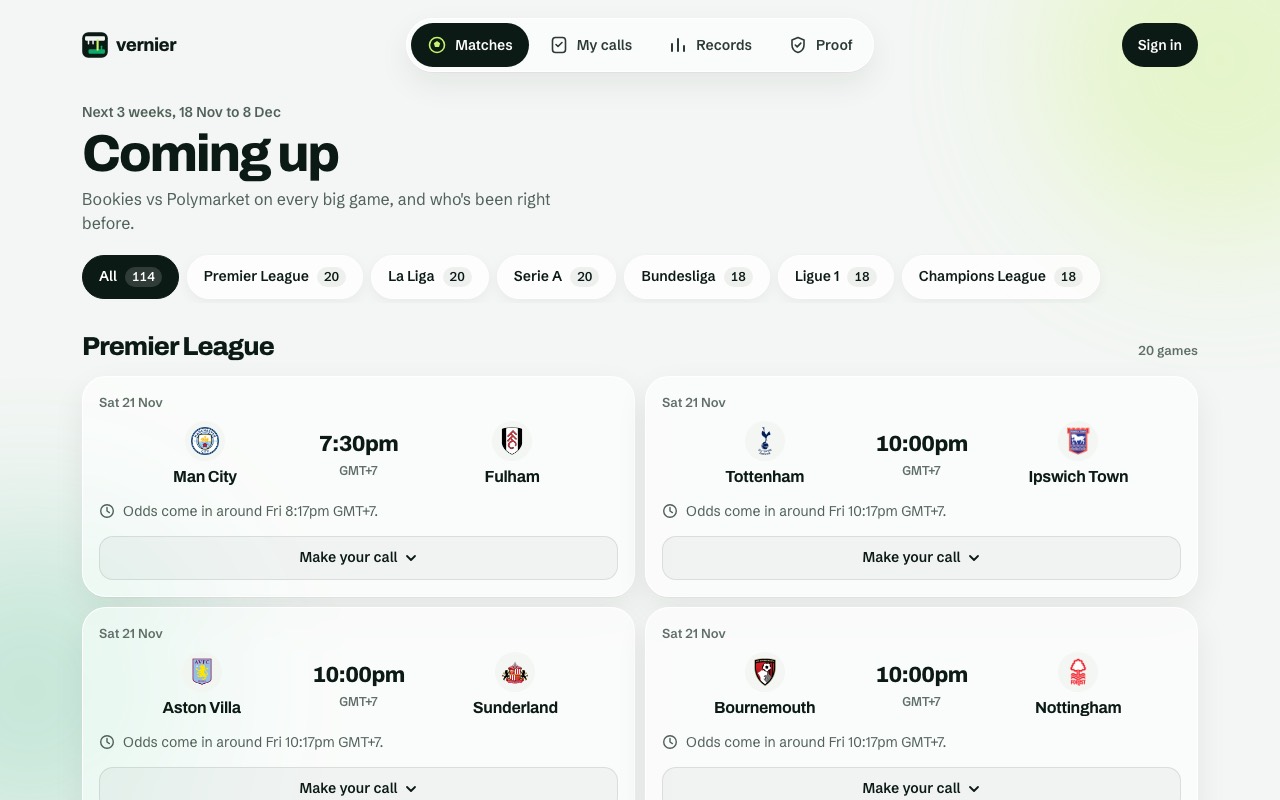
Vernier
Vernier grades bookies against Polymarket on football. Odds are stamped on Sui before kickoff, scored after full time, and recalled from Walrus when a similar game comes up. On 72 matches graded so far, there are no bets. Just the evidence.
Built by Maverick.
Sui on Tatum
GraphQL for the screen. gRPC for the pipe.
These apps read Sui through Tatum. GraphQL is the joined read: balance, objects, and recent transactions in one query. gRPC is the typed path: simulate, execute, and a live checkpoint stream.
| Job | Use |
|---|---|
| Balance, objects, and recent transactions in one query | GraphQL |
| Simulate a transaction, then execute it | gRPC |
| Live checkpoint stream | gRPC SubscribeCheckpoints |
Smart Agents for Real Life
Track 02 · 80 projects · $1,000
Agents that watch an inbox, a budget, a habit, or a workflow, then pick up the thread in the next session. Portable memory is the point. The agent should not meet you as a stranger every time you open a new chat.
Eighty projects took that brief. The podium is three versions of the same worry: memory that can be poisoned, memory you do not own, and an agent that pays before it has learned when to ask. They remember, they pay, and they refuse.
Announced in this thread.
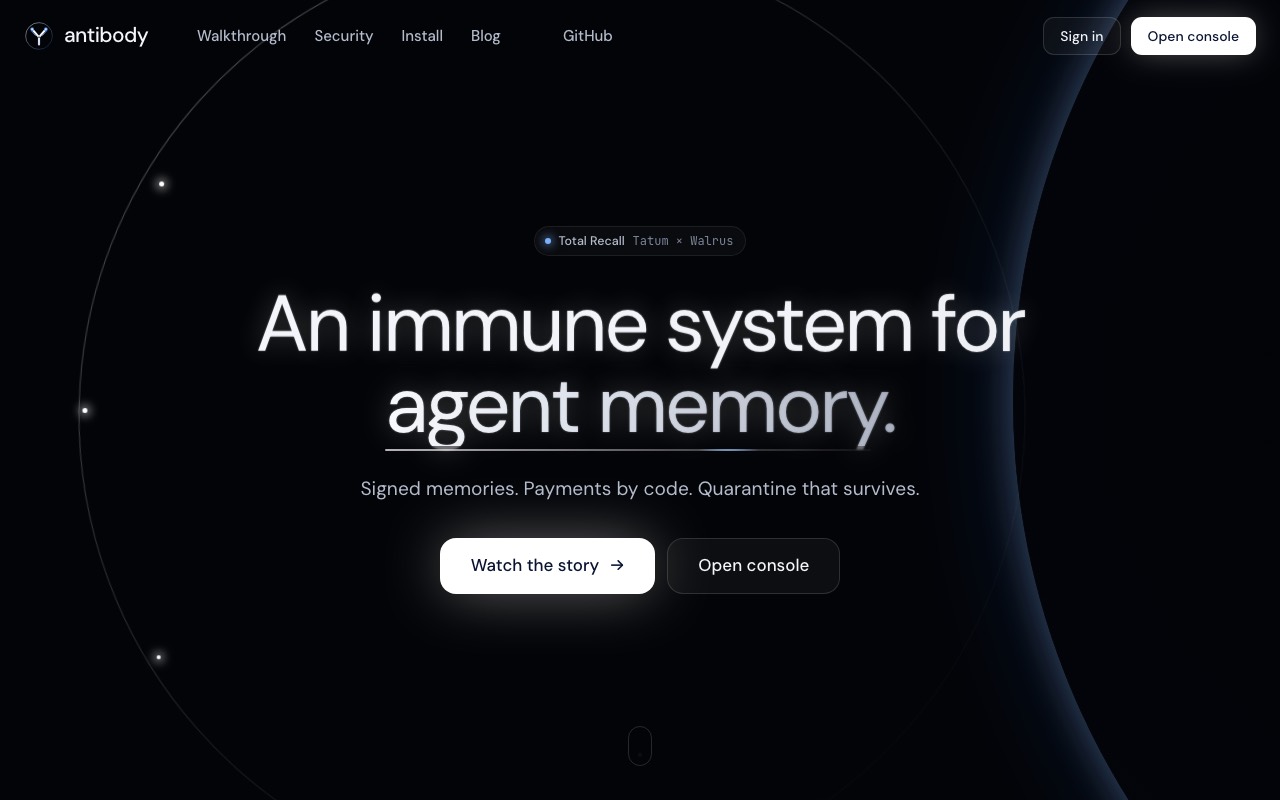
Antibody
Antibody is an immune system for agent memory. It sits between Steward, a bill-paying agent, and its Walrus Memory account, so a poisoned memory cannot redirect a payment. Every memory is a signed envelope. Payments pass six rules in code, including an exact dry run through Tatum.
Built by lino.
Ferry
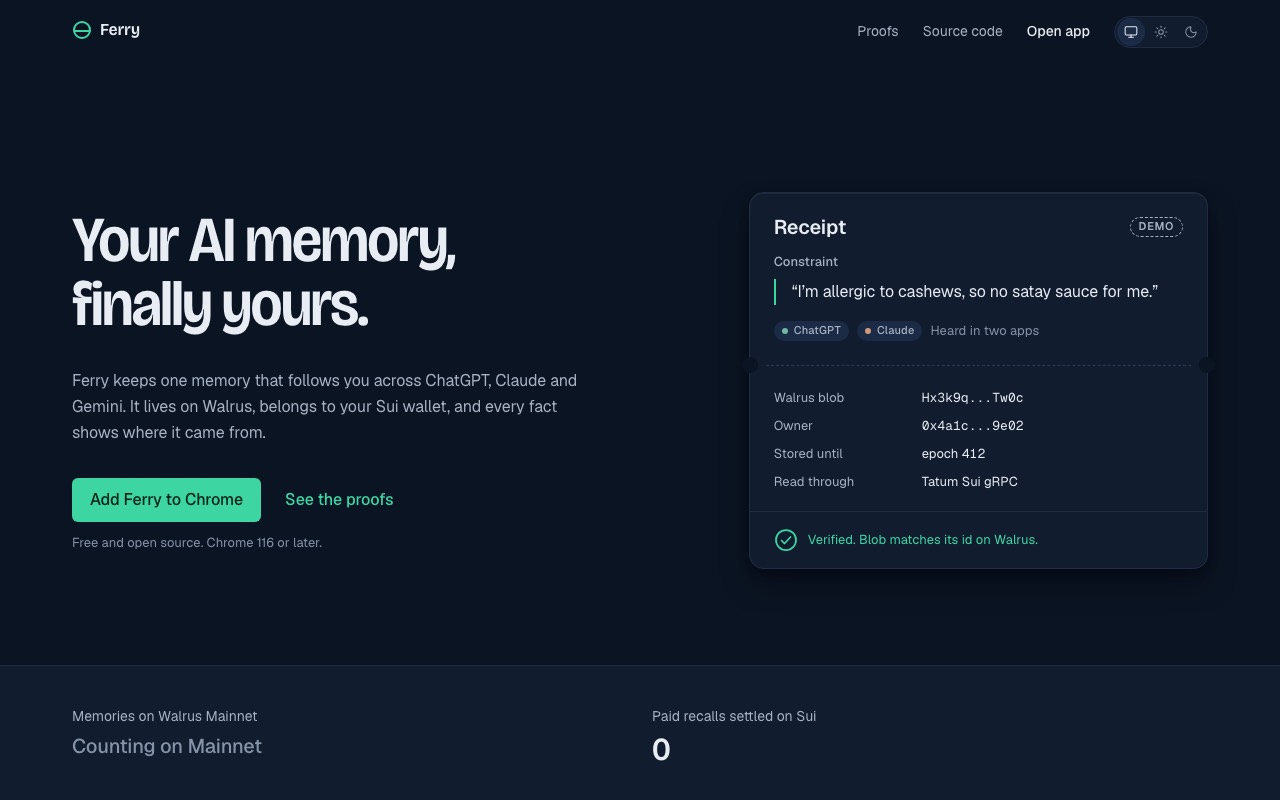
Ferry moves your AI memory into a store you own on Walrus Mainnet, keyed to your Sui wallet, and carries it into whichever AI you open next. Rescue imports facts from ChatGPT, Claude, or Gemini. A Chrome extension offers them when you type. Agents can pay for a published slice over MPP. Every chain read goes through Tatum Sui gRPC.
Built by Adwait Keshari.
Ellai
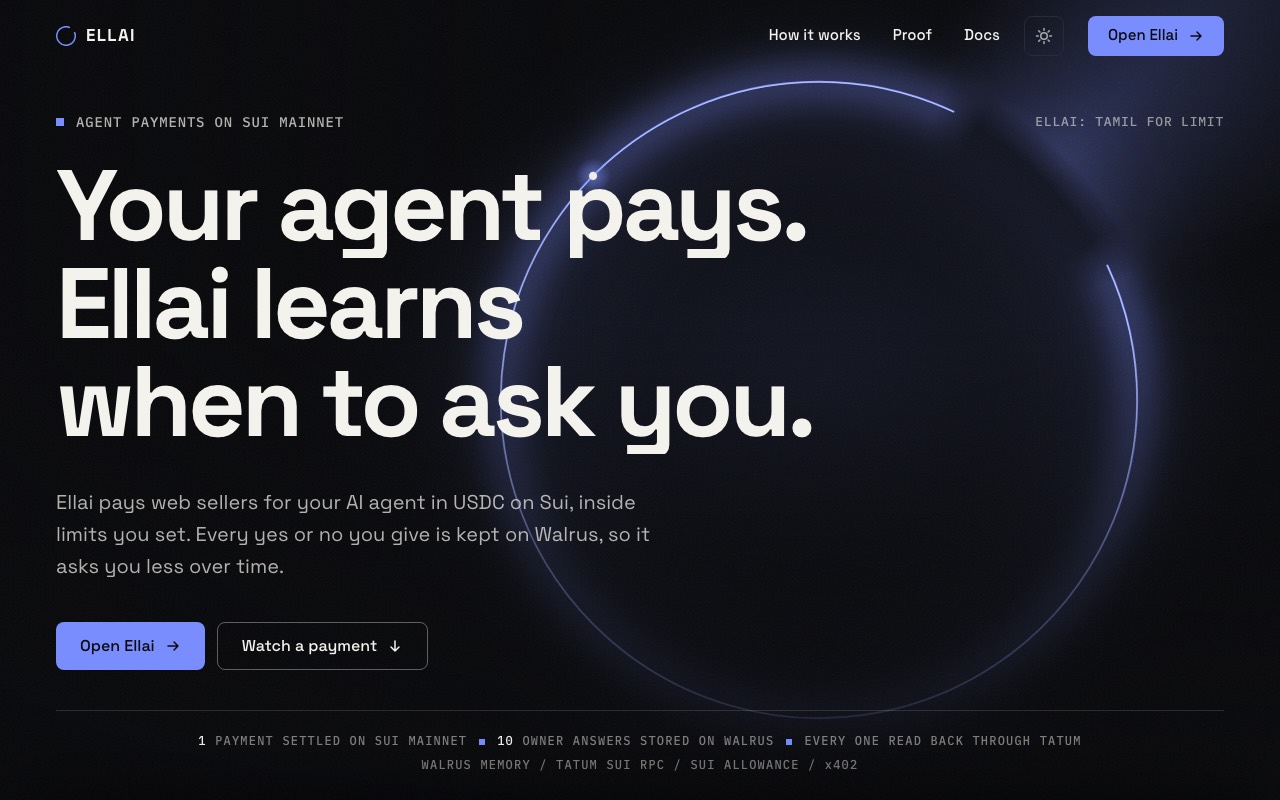
Ellai lets an AI agent pay web sellers on Sui inside limits you set. Your yes or no becomes a memory in your own Walrus Memory account. Later it recalls the closest past answers and pays on its own only when enough of your approvals match. A refusal always wins. No model decides about money.
Built by Ram.
Same key, two hosts
Dry runs, receipts, and a stream.
Antibody dry-runs a payment before money moves. Ferry reads a blob receipt back from Sui. Ellai checks the allowance, then settles. One API key covers both surfaces. Docs for each host are one click from the dashboard.
| Call | Host | Docs |
|---|---|---|
| Simulate, execute, SubscribeCheckpoints | Sui gRPC | gRPC reference |
| Object, balance, transaction in one query | Sui GraphQL | GraphQL reference |
Consumer Finance Apps
Track 03 · 61 projects · $1,000
Money products people actually open. Shared budgets, spend tracking, savings goals, payment flows that feel ordinary. The chain stays in the background. Walrus Memory is what makes a balance, a habit, or a preference stick after you close the tab.
Sixty-one projects shipped in this lane. The three that placed are a shop credit book that learns who pays, a wallet you can ask about its own trades, and a household budget that writes down the rule the house was already following.
Announced in this thread.
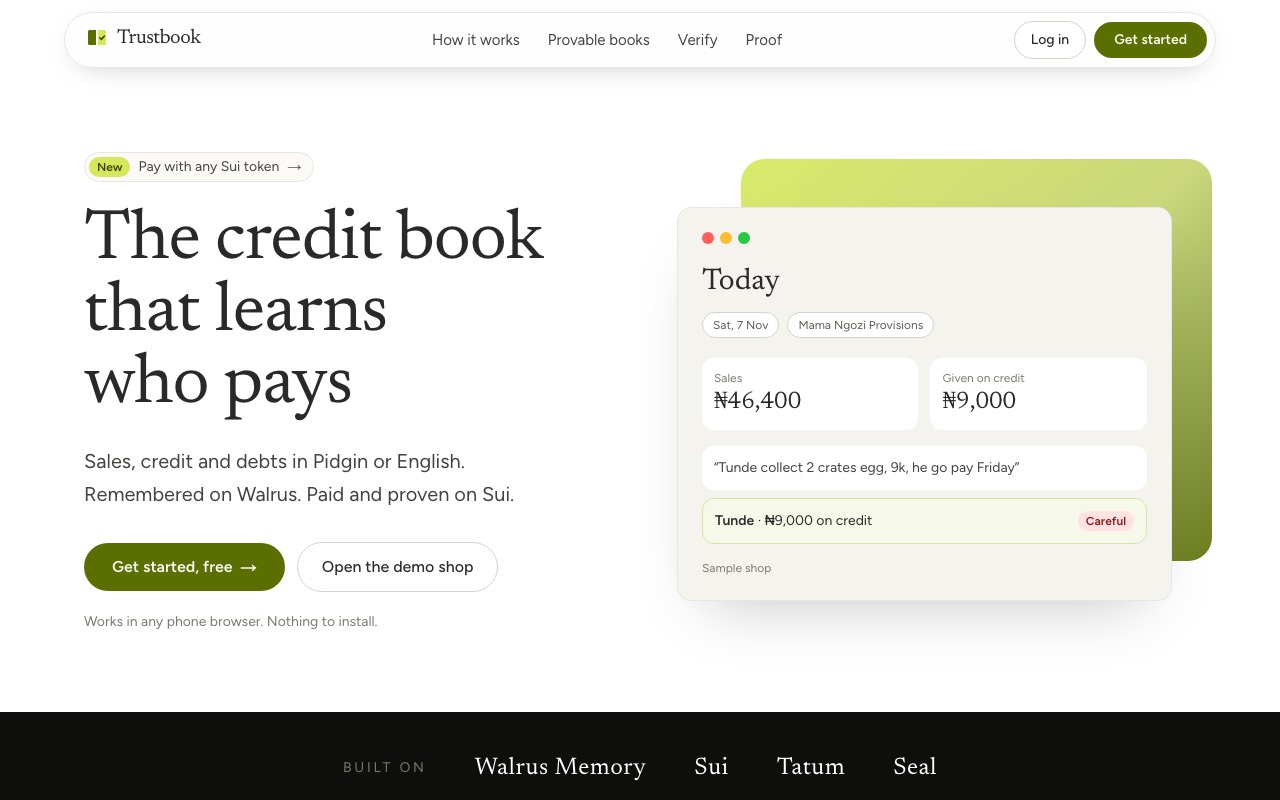
Trustbook
Trustbook is an AI credit book for small shops, built first for Nigerian market traders. Owners record sales and credit by typing or speaking, in Pidgin or English. The model can structure an entry. Nothing is saved until the owner confirms it. Credit history lives in Walrus Memory, balances come from an append-only ledger, and day seals are anchored on Sui through Tatum.
Built by Stellamaris.
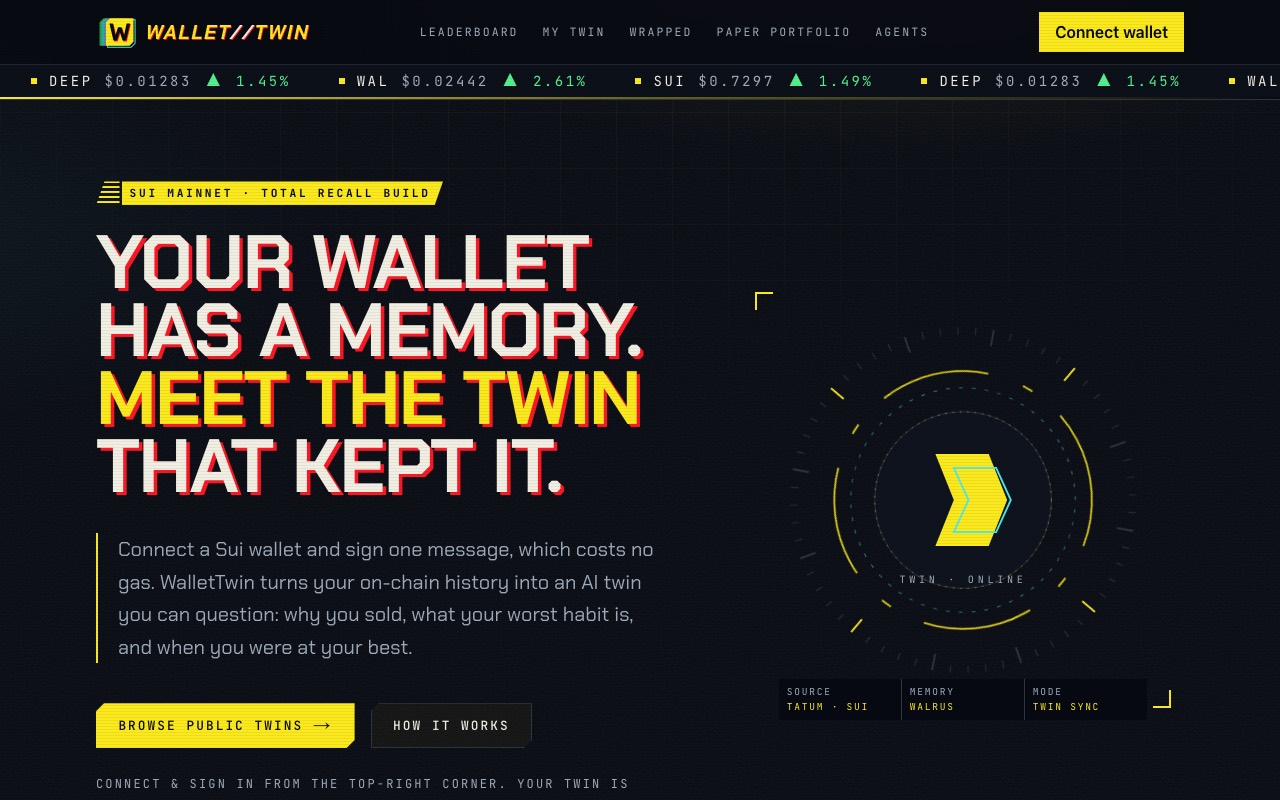
WalletTwin
WalletTwin turns a Sui wallet into a second brain you can talk to. It reads the trading history through Tatum, works out PnL and habits, and writes the profile to Walrus Memory on mainnet. Ask it how you trade, or publish the twin so someone else can learn the style.
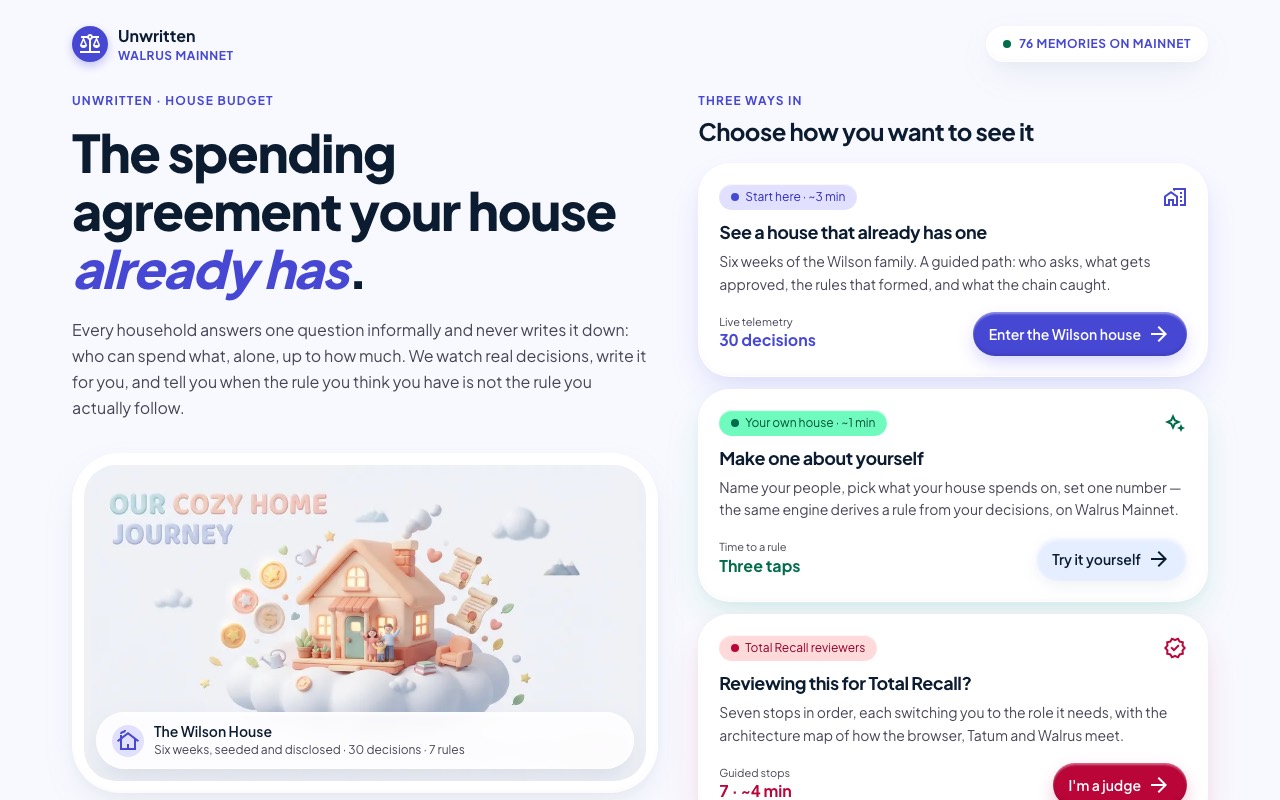
Unwritten
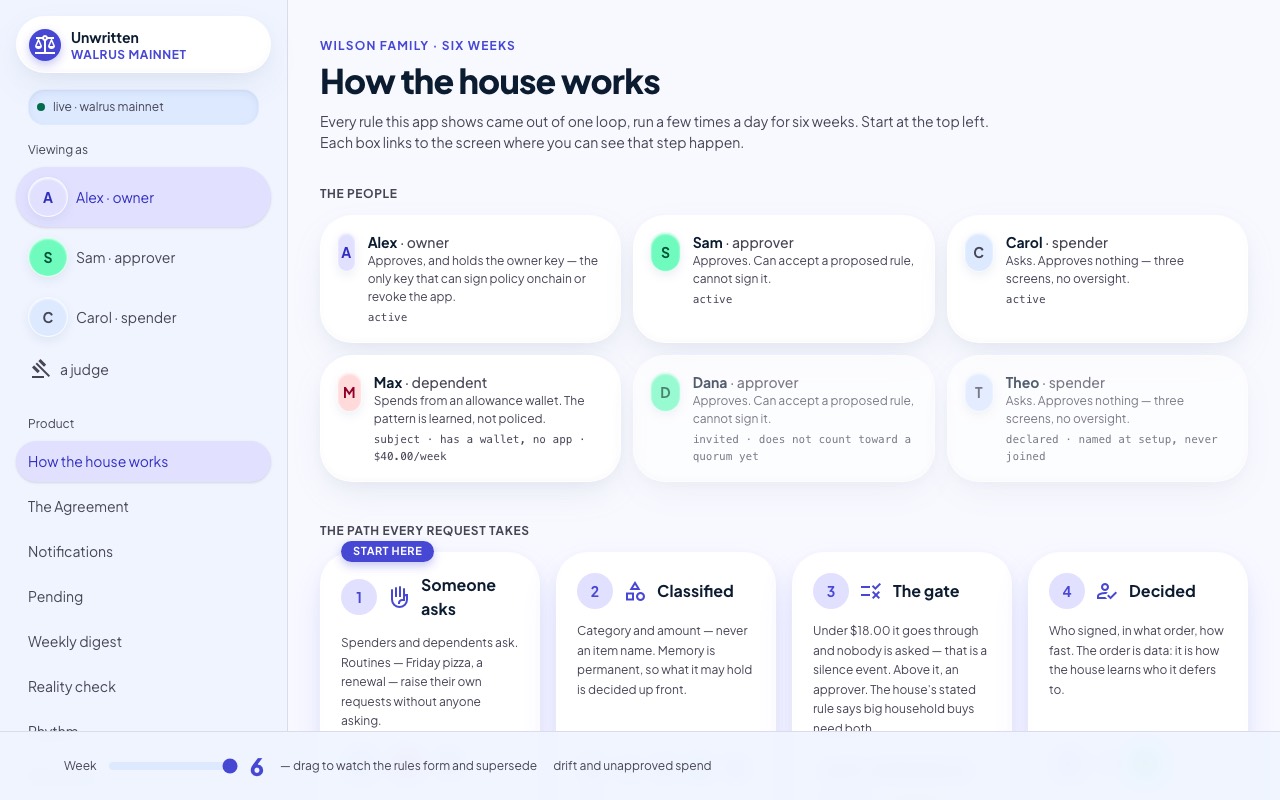
Unwritten is a shared household budget that finds the rules the house already follows. It watches real decisions and writes the agreement back to Walrus Memory on Mainnet, versioned and append-only, with no model in the learning path. Tatum's Sui gateway matches every transfer to an approval held in memory. It also takes Best Tatum AI Builder, below.
Built by Ed.
Bonus awards
Three $500 bonuses sit on top of the track prizes: the deepest memory loop, the strongest app built in Tatum AI Builder, and the best use of agent payments (x402 or MPP, settled on Sui).
Best Walrus Memory is Quits. Best Tatum AI Builder app is Unwritten, which also placed third in Consumer Finance. Best Use of Agent Payments is Calibro.
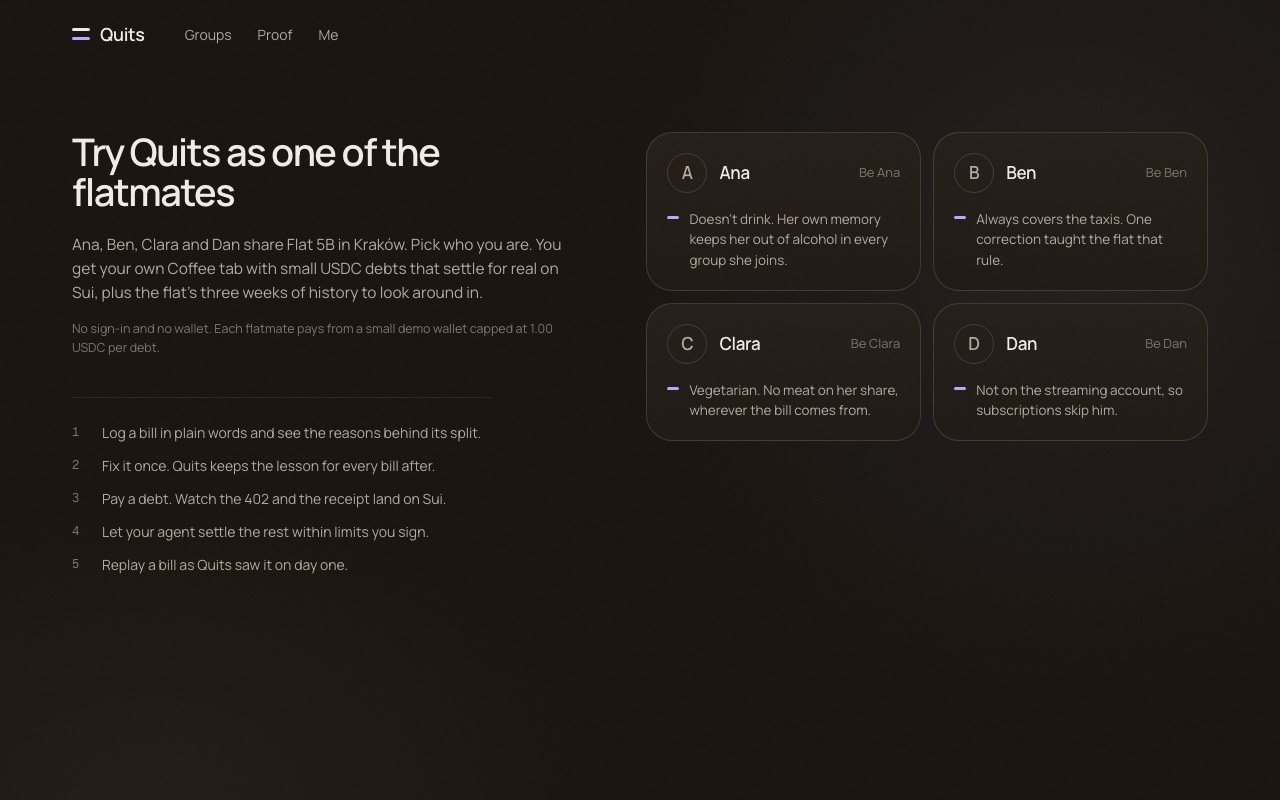
Quits
Quits is the group tab that learns the rules nobody wrote down. You log a bill in plain words ("412 zł dinner, Clara paid, 140 of it was wine") and correct a wrong split once ("Ana doesn't drink"). That correction becomes a typed rule on Walrus Memory. Personal rules follow a member into the next group. A fact about one night stays a fact about one night.
A new group's first week, measured on the builder's benchmark, goes from 50% to 70% right once those personal rules travel with the members. Debts can also settle themselves: a member signs one Sui allowance, and the Move contract checks every pull. The demo needs no wallet. You play one of four flatmates with real USDC debts on Sui mainnet.
Built by Yehor Ivashchenko. Write-up
Unwritten
Unwritten is the same house, seen from inside. Six weeks of the Wilson family are already running: who can spend, who has to ask, and the path every request takes. Ed built it primarily in Tatum AI Builder, then wired that product to Walrus Memory on Mainnet and to Tatum's Sui gateway. The track prize is for the agreement the house already follows. This bonus is for shipping it from the builder.
Built by Ed.
Calibro
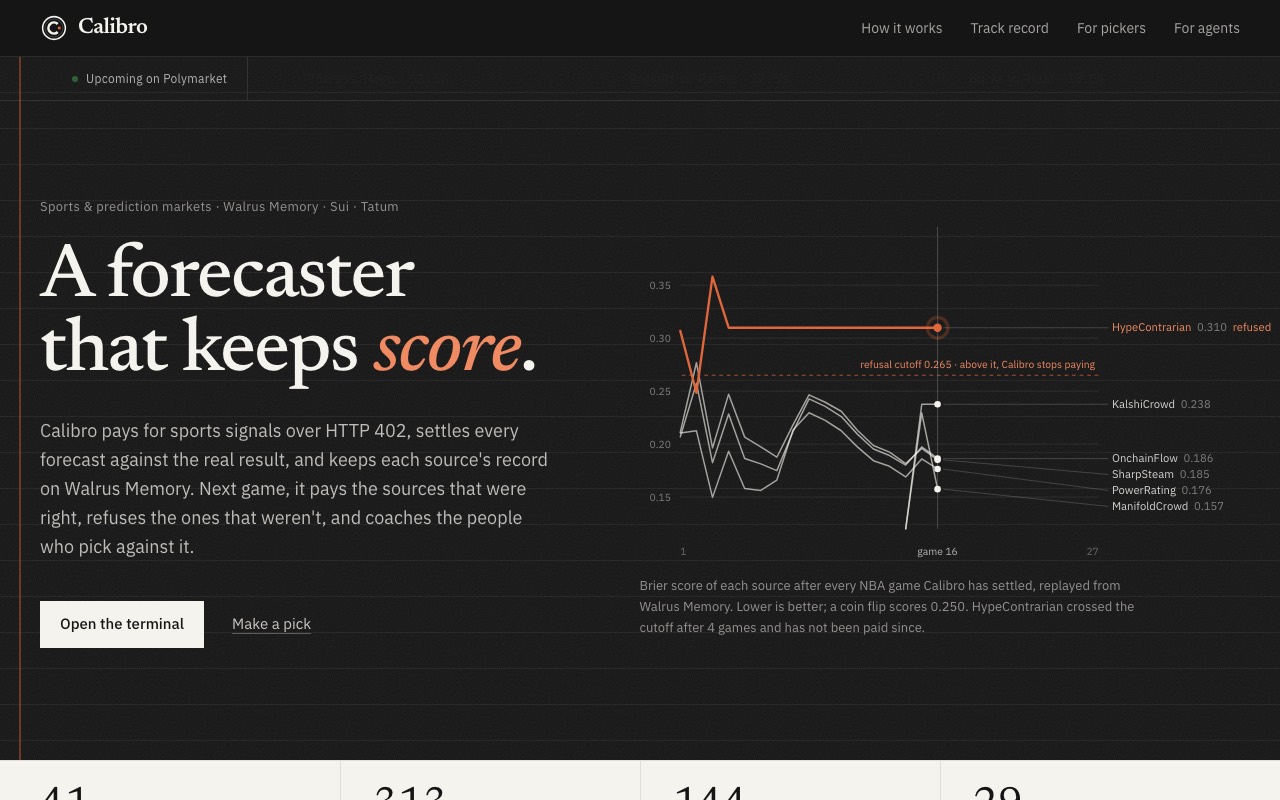
Calibro is a sports forecaster that remembers which sources were right and pays only them. For each Polymarket game it recalls every source's Brier score from Walrus Memory, then buys the signal over HTTP 402 with a real Sui mainnet payment. Tatum's Sui GraphQL gateway checks that payment before the signal is released. A source with a bad record is refused. The rest are de-biased, weighted by their record, and sized with quarter-Kelly. No language model picks the number.
On mainnet that is 41 settled games, 144 paid signals, and 29 payments refused from memory. When a game resolves, a scheduled job scores every signal it bought and writes the new calibration back to Walrus.
Build on the same stack
Walrus Memory writes on Mainnet. A free Tatum API key covers Sui gRPC and GraphQL on the same account. The guide for picking one, or using both, is Sui GraphQL vs gRPC.
Questions about a winning build, or the next hackathon: Tatum Discord.