

%20(28).jpg)
As tax season approaches, the collective anxiety in the Web3 space starts to climb. For developers and active builders, this time of year is particularly brutal. While a retail investor might only have a handful of exchange trades to worry about, those of us living on chain are dealing with a tangled web of smart contract interactions, liquidity pool migrations, staking rewards, and NFT mints.
Tracking every single one of these events manually is a recipe for a headache and an audit. In most jurisdictions, the tax man views crypto as property. This means every time you move an asset, swap a token, or receive a reward, you are potentially triggering a taxable event. The challenge for a developer is translating raw blockchain data into the specific formats required by tax authorities.
Thankfully, the ecosystem of crypto tax tools has matured. We are no longer stuck trying to manually parse Etherscan exports into a spreadsheet. Modern software can now read your wallet history, pull in fair market values from the exact moment of each transaction, and generate a clean report. Here is a look at the landscape of crypto tax software in 2026 and how to choose the right tool for your specific workflow.
The Technical Challenge of Crypto Tax
The reason crypto tax is so complex compared to traditional finance is the lack of centralized reporting. When you sell a stock, your broker usually sends you a neat form at the end of the year. In Web3, you are the broker. If you bridged funds from Ethereum to an L2, swapped on a DEX, and then provided liquidity to a pool, you have created a series of events that a standard accounting tool cannot understand.
You have to account for the cost basis of every asset. This is the original value of the asset when you acquired it, including any transaction fees. When you dispose of that asset, whether by selling it for fiat or swapping it for another token, you realize a gain or a loss.
There is also the distinction between capital gains and income. If you are a developer receiving a grant or a salary in stablecoins, that is generally taxed as ordinary income based on the value at the time of receipt. If those stablecoins then sit in your wallet while the value of the underlying peg fluctuates or if you swap them for ETH or BTC, you are then entering the world of capital gains. Handling this distinction across thousands of transactions is where specialized software becomes mandatory.
Top Crypto Tax Tools for 2026
1. Koinly
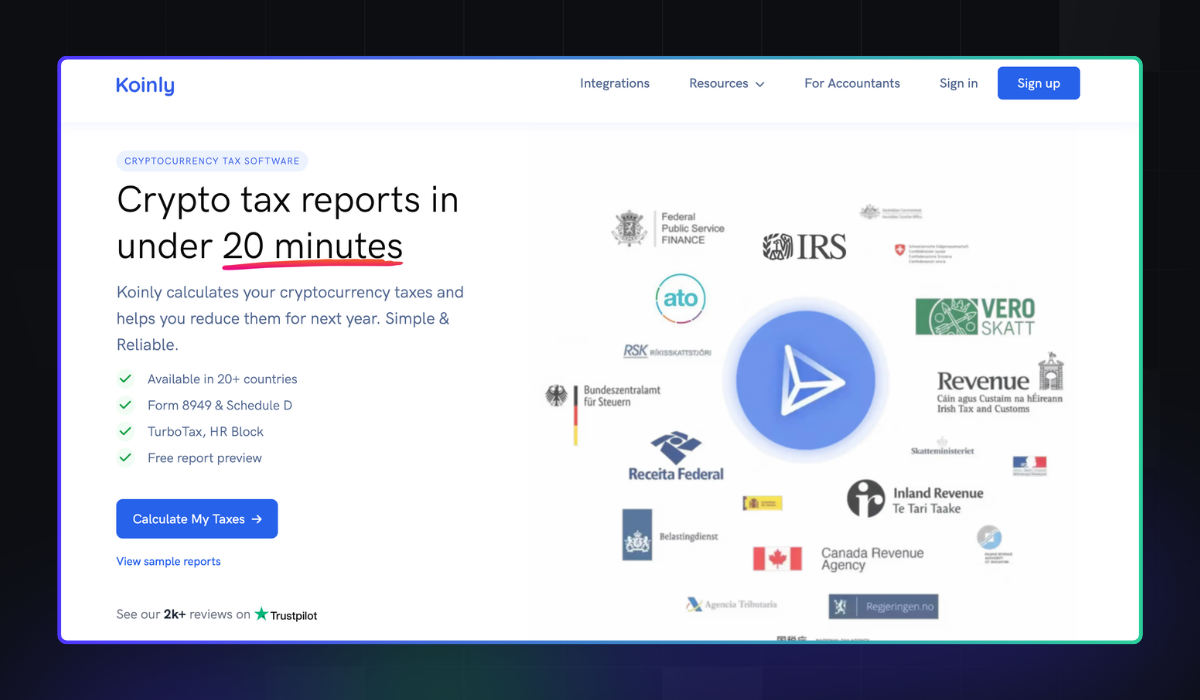
Koinly is often the first recommendation for anyone looking for a balance between ease of use and deep integration. Its primary strength is the sheer volume of supported platforms, including over 700 exchanges and nearly 100 different blockchains. For developers who have assets scattered across multiple networks, Koinly does an excellent job of consolidating that data into a single, readable view.
The platform automatically handles the heavy lifting of calculating gains and losses using various accounting methods like FIFO or LIFO. It is particularly good at identifying transfers between your own wallets, which helps avoid double counting gains. If you need a tool that covers the basics flawlessly while providing enough depth for moderate DeFi activity, Koinly is a reliable choice.
| Website | Trustpilot Reviews | Pricing |
|---|---|---|
| Koinly | 4.6 / 5 - 2,245 Reviews | $49 - $199 |
2. CoinTracker

CoinTracker is one of the most established players in the space and has built a very robust infrastructure. They are particularly good for users who need high level exchange support and a real time view of their portfolio. They offer a very clean dashboard that provides a view of your tax liability throughout the year, not just during tax season.
One of their standout features is their partnership with major exchanges like Coinbase, which allows for very deep API integrations. This reduces the frequency of broken data that sometimes occurs when a platform changes its file format. It is a premium choice for those who value stability, a high level of customer support, and a polished user interface.
| Website | Trustpilot Reviews | Pricing |
|---|---|---|
| CoinTracker | 4.6 / 5 - 1,735 Reviews | $0 - $1999 |
3. CoinLedger
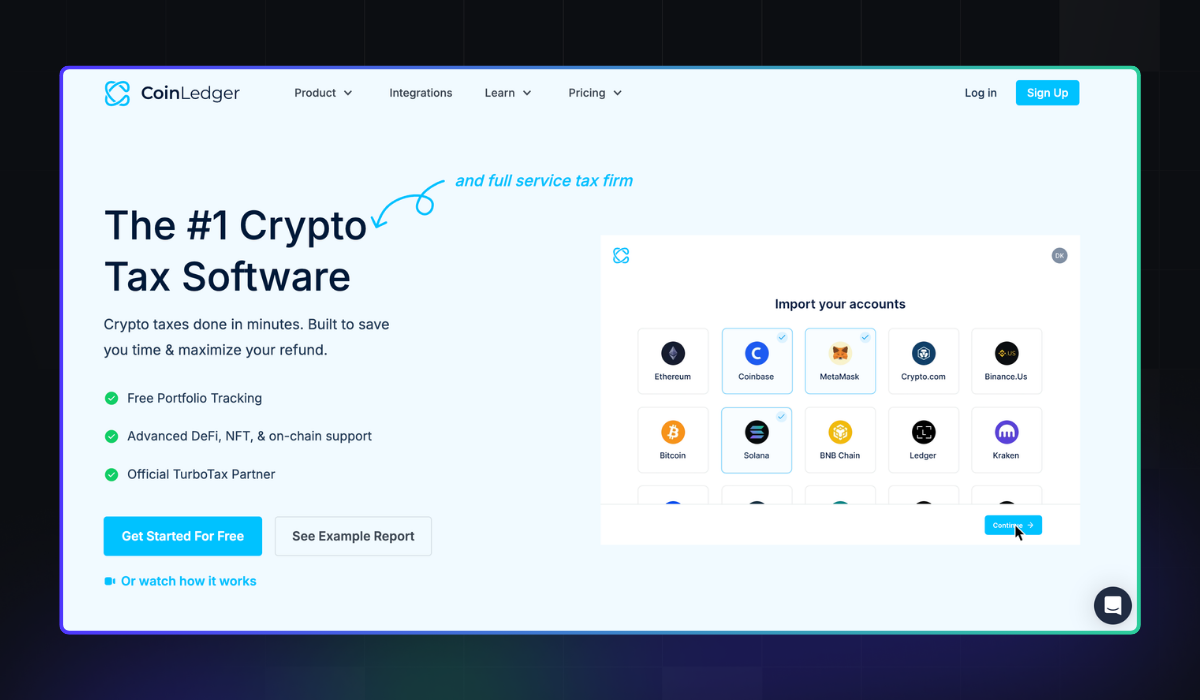
They have focused heavily on the final step of the tax process. While many tools give you a raw report, CoinLedger ensures that the report is perfectly formatted for the most common filing platforms, allowing for a seamless import.
Beyond just reporting, CoinLedger has made strides in supporting professional tax preparers. If you work with a CPA who is skeptical of crypto, CoinLedger provides a clear audit trail that can help demystify your on chain activity. Their integration with major platforms and NFT marketplaces is smooth, making it a favorite for those who want a simple experience for their annual filing.
| Website | Trustpilot Reviews | Pricing |
|---|---|---|
| CoinLedger | 4.5 / 5 - 1,320 Reviews | $49 - $199 |
4. SUMM (Ex CryptoTaxCalculator)

This tool is built for the power users and developers. If your transaction history is a mess of complex DeFi protocols, obscure layers, and experimental smart contracts, SUMM is often the only tool that can accurately parse the data. They prioritize on chain accuracy and have a very granular approach to smart contract interactions.
Instead of just seeing a generic outbound transaction, this software tries to understand the intent. It can distinguish between adding liquidity to a pool, staking a token for rewards, or participating in a complex yield strategy. For developers who are constantly interacting with new protocols that standard software has not indexed yet, the depth of their DeFi engine is a massive advantage.
| Website | Trustpilot Reviews | Pricing |
|---|---|---|
| Summ | 4.5 / 5 - 731 Reviews | $49 - $499 |
5. TokenTax
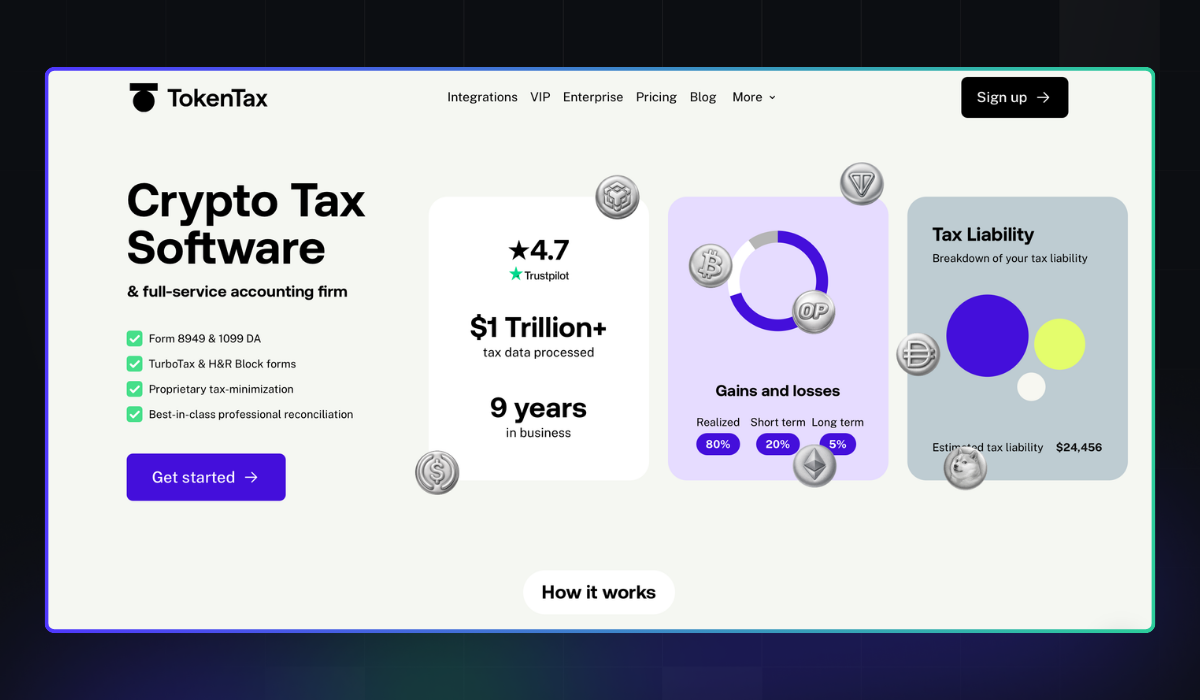
TokenTax operates more like a hybrid between a software platform and a full service accounting firm. While they have a robust automated platform, they also offer plans where their team of crypto specialist CPAs will handle the entire filing for you. This is invaluable for high net worth developers or founders who have incredibly complex situations like DAO governance rewards or international tax implications.
They support every exchange and every margin trading platform, making them a go to for high frequency traders. If you have moved beyond the point where automated software can solve your problems and you need a human expert to look over your smart contract interactions, TokenTax is the industry standard for white glove service.
| Website | Trustpilot Reviews | Pricing |
|---|---|---|
| TokenTax | 4.7 / 5 - 213 Reviews | $65 - $1,999 |
6. TaxBit
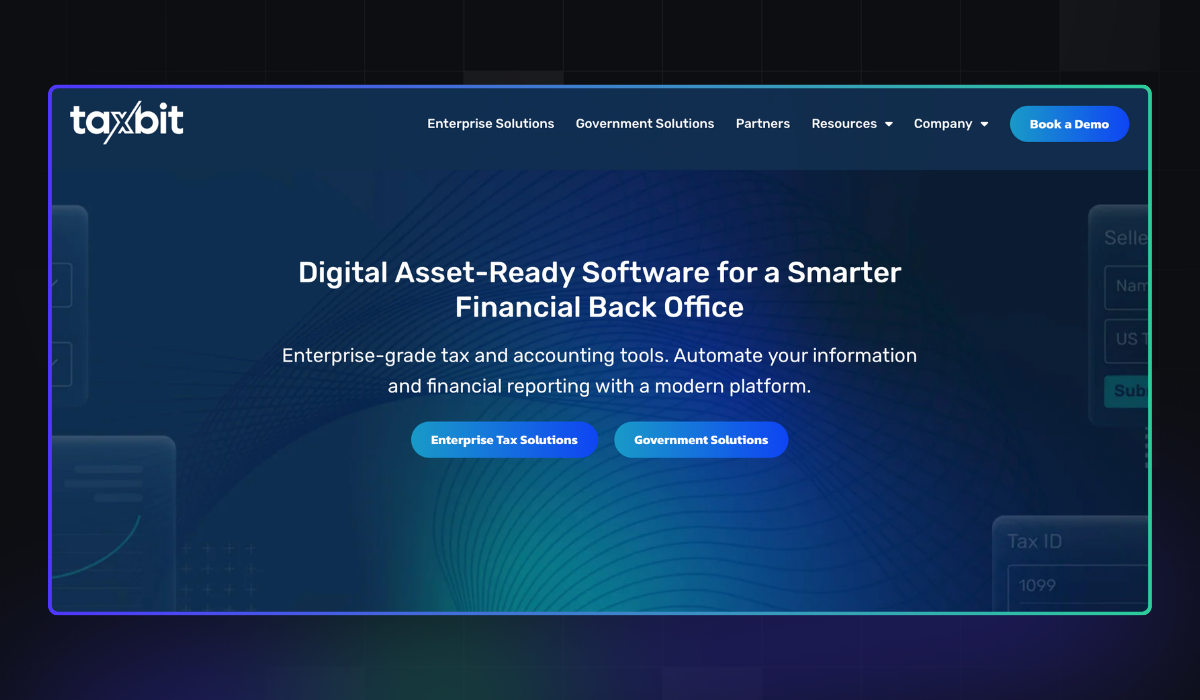
TaxBit has positioned itself as the enterprise solution for crypto taxes, but they offer excellent tools for individual users as well. They have focused heavily on real time compliance. Instead of waiting until the end of the year to see your tax bill, TaxBit provides a tax optimizer that helps you make better trading decisions throughout the year based on the potential tax impact.
They have partnered with some of the largest institutions in the space to standardize how crypto data is reported. This focus on institutional grade accuracy makes them a very safe choice for those who are concerned about regulatory scrutiny. Their interface is clean, professional, and built to handle massive amounts of data without slowing down.
| Website | Trustpilot Reviews | Pricing |
|---|---|---|
| TaxBit | 3.6 / 5 - 376 Reviews | Upon Request |
7. Awaken
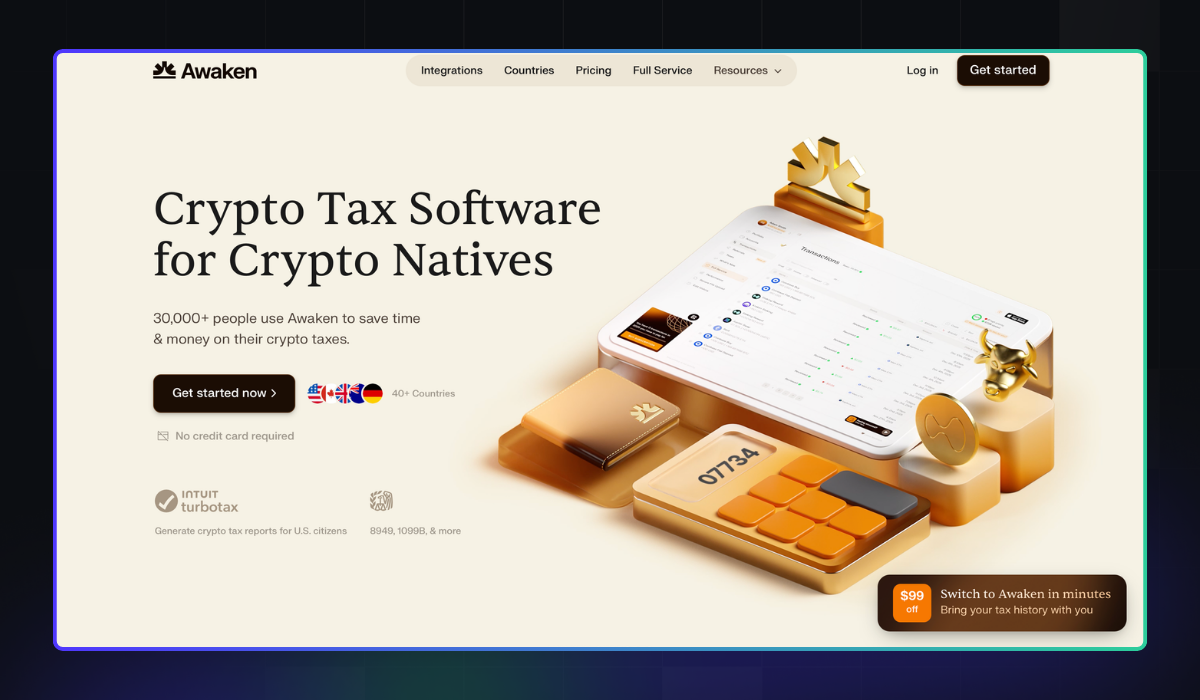
Awaken is a newer entrant that is specifically designed for the Web3 and NFT era. While older tools sometimes feel like traditional accounting software with crypto bolted on, Awaken feels Web3 native. It has a heavy focus on the decentralized part of the ecosystem, offering excellent support for various chains and a very intuitive way to categorize NFT mints and sales.
The tool is built to be fast and visually focused. It uses a very modern tagging system to help you organize your transactions quickly. For a developer who spends most of their time on DEXs and NFT platforms rather than centralized exchanges, Awaken offers a fresh and efficient workflow that skips much of the legacy bloat found in older platforms.
Security and Data Privacy
A common concern when using these tools is security. You are giving a third party access to your financial history. The industry standard is to use read only API keys. This means the software can see your transaction history but has no power to move funds or execute trades. When you connect your wallets or exchanges, always double check that you are not granting transfer or withdrawal permissions.
The Magic
It is worth noting that the "magic" these reporting tools perform behind the scenes relies on incredibly robust data pipelines.
Many of the leading compliance and tax platforms actually use the Tatum Data APIs to power their back end. By utilizing specialized endpoints for transaction history, wallet portfolios, and real time price feeds, these tools can reconcile thousands of transactions across dozens of chains in a matter of seconds.
For developers building their own internal accounting or compliance dashboards, having access to these same Data API endpoints allows for the same level of precision that professional tax software provides. Whether it is fetching the historical balance of a specific address or tracing the origin of funds, the reliability of the underlying data is what makes or breaks a tax report.
Build Better Compliance Tools with Real-Time Data
Accurate tax reporting is only as good as the data behind it. Use Tatum Data APIs to instantly connect your application to 130+ blockchains. Fetch historical balances, transaction histories, and real-time portfolios to give your users the visibility they need to stay compliant in the on-chain economy.
Get your free API key ASAP!
The best strategy for the 2026 season is to start early. Do not wait until the week before the deadline to sync your wallets. Connect your accounts now, let the software crunch the numbers, and see if there are any missing transactions or data gaps you need to fix. Dealing with a few unknown transactions in March is much easier than trying to solve a thousand of them in April. Compliance is not fun, but with the right stack, it does not have to be a nightmare.